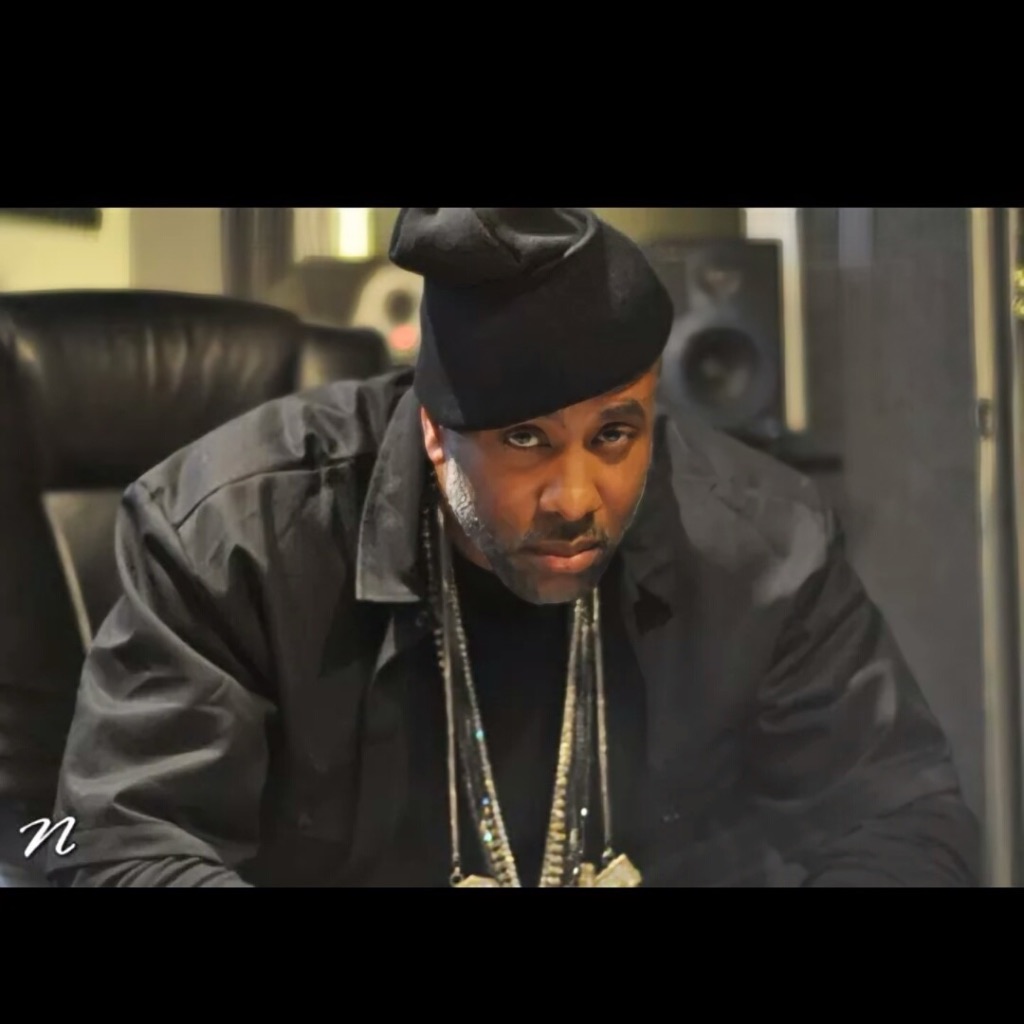
Super Producer Self in the studio
A True Story · Edward "Self" Hinson

From Prisonto Platinum

The Super Producer Self Story

How a Kid From Southside Jamaica Queens Made 25+ Platinum Records

Super Producer Self
Grammy-Nominated · DMX · Jay-Z · LL Cool J · Onyx · Cam'ron · Ja Rule · Bone Thugs
25+Platinum Records
41Verified Credits
8Yrs in Prison
27+Years Active
superproducerself.com · ELPD Productions Inc.

Dedicated To To my six children —
everything I've ever done,
every beat I've ever made,
every time I got back up off the floor
was for you.

To Rat, who gave me a floor to sleep on
when the floor was all I had.

And to anyone sitting in a cell right now
who still has a dream inside them.

Your story isn't over.

Table of Contents
INTRO
Before You Read This
Why I'm telling you the truth — all of it
01
Southside Jamaica Queens
1967 — the borough that made me and the streets that almost broke me
02
Shadyville
Moving to the wrong side and what the streets taught me that church couldn't
03
The Wrong Route — Eight Years
Prison at 16. Eight years. What those walls actually taught me
04
The Keyboard Nobody Wanted
Salt-N-Pepa, the ASR-10, and a basement that changed everything
05
Mind Management & The 24th Floor
Rockaway Blvd, Harlem, and the living room where the real hits were born
06
Onyx, DMX & Irv Gotti
Shut 'Em Down, What's My Name, and learning the game from the inside
07
Loreal, Chris Lighty & The Placements That Built the Name
The two people — besides Eat 'Em Up — who made me who I am
08
Bone Brothers on the Tour Bus
Daddy's House, Wishbone, a tour bus album, and the GP tattoo — RIP Mustafa
09
The Million Dollar Room
Amazin, Dino Delvaille, a billboard at Gertz Mall, and a deal worth over $1,000,000
10
The Fall
Depression, the DWIs, and how I lost everything I built
11
Rikers Island
Rock bottom has a name and an address
12
Atlanta — The Barbershop Floor
2006. Broke. Alone. Starting over at 39
13
The Publishing Trap
The Universal deal, Irv Gotti's credit theft, 20 years to recoup, and how I learned the business the hard way
14
The Second Rise — Where I Am Today
True Sound MediaPlex, The Service Station TV, and how I rebuilt from nothing — again
Full Discography — 41 Verified Credits
Every record. Every artist. Every platinum placement.
Lessons Learned — What the Plaques Don't Tell You
27 years distilled into the truths nobody puts in the interview
Advice to Producers — The Real Talk
What I'd tell every young producer trying to make it right now
CLOSE
Your Story Isn't Written Yet
The invitation — and where to go from here
Introduction

Before You Read This

Why I'm telling you the truth — all of it

I didn't write this book to impress you.

I'm not going to stand up here and give you the polished version of my life — the version where I was always talented, always focused, always on the path. That's not my story. That's not most people's story. And if I told you that version, I'd be lying to your face, which is the one thing I promised myself I would never do again.

My name is Edward Hinson. Born August 27, 1967. Queens, New York. The world knows me as Super Producer Self — or just Self. I've made beats for DMX, Jay-Z, LL Cool J, Onyx, Cam'ron, Juelz Santana, Ja Rule, Fat Joe, Method Man, Bone Thugs N' Harmony, and a list of artists that kept growing long after I stopped counting. I have 25+ platinum records to my name. A Grammy nomination. A career spanning 27+ years in one of the most ruthless industries on earth.

I also went to prison. In 1987, at nineteen years old, convicted on multiple drug charges — selling and distribution. I served eight years total across multiple bids. I came home and built something from nothing, and then I lost it. All of it. And then I built it again.

Both things are true. The plaques and the prison. The platinum and the pain. And I'm done pretending one cancels out the other.

I'm telling you all of it — because the real lesson isn't in the success. The real lesson is in the fall. And the real miracle isn't going platinum. The real miracle is getting back up.

If you're reading this and you've ever felt like you already blew your shot — this book is for you. If you've made bad choices. If you've been locked up. If you've lost everything. If you're starting over in a city where nobody knows your name. This book is for you.

"You can go to prison, you can go to jail, you can mess up — but you can always clean yourself back up again."

— Super Producer Self

Your story isn't over. I'm proof of that. Let's get into it.

Chapter One

Southside Jamaica Queens

1967 — the borough that made me and the streets that almost broke me

I was born on August 27, 1967 — and I came into the world in Jamaica Hospital, Queens, New York. If you know Queens, you already know what that means. It's not Manhattan. It's not the glamour. It's real. Working class. Immigrant families and American dreams stacked on top of each other in two-family houses on streets that had no patience for softness.

Southside Jamaica Queens. That's where I was raised before we moved. And I want you to understand what that place was in the late 1960s and through the 1970s, because where you grow up writes something permanent into you whether you want it to or not.

Jamaica, Queens was producing kings. LL Cool J came from Hollis, right there in Queens. Run-DMC came from Hollis. 50 Cent grew up in South Jamaica. Nas is from Queensbridge, right across the bridge. The whole borough had this energy — this competitive fire — where if you weren't sharp, the neighborhood sharpened you whether you asked it to or not. You learned to read rooms. You learned to read people. You learned that respect was currency and that how you carried yourself determined everything about how the world received you.

My household was not the street. My mother and father were both ministers. Evangelists. Church was not a Sunday event — it was the operating system of our home. Scripture, prayer, discipline, service. My parents were good, faithful, principled people who did everything right. I say that with love and without qualification. They gave me a foundation that I spent years running away from and decades coming back to.

"I grew up in a house full of God. And I still chose the streets. That says something about the pull of where you grow up."

— Super Producer Self

I attended Andrew Jackson High School in Cambria Heights, southeastern Queens. That school shaped me. It was the same school that produced names who went on to do real things. But before any of that — before the music, before the industry, before any of the stories in this book — I was just a kid from Southside Jamaica trying to figure out where he fit in a borough that rewarded toughness and punished hesitation.

Around 1979, we moved to Shadyville. And that's where the story really starts.

Real Talk

Where you're from is not a limitation. It's a curriculum. Queens taught me how to read a room, how to compete, how to survive, and how to be real. Every single one of those skills translated directly into the music industry — which is nothing but a room full of people trying to read each other. Know your borough. It gave you more than you think.

· · ·
Chapter Two

Shadyville

Moving to the wrong side and what the streets taught me that church couldn't

Around 1979 — I was twelve years old — we moved to the area around Hempstead and Springfield that the neighborhood called Shadyville. The name alone should tell you something. When a neighborhood names itself Shadyville, it is not irony. It is self-awareness.

The late seventies and early eighties in Queens were a specific kind of chaos. Hip hop was being invented a few miles north in the Bronx — block parties, DJs, MCs, the whole thing was being born in real time. The crack epidemic had not yet arrived in force, but everything that preceded it was already in place: the poverty, the lack of opportunity, the underground economy that filled the vacuum left by everything that was supposed to be there and wasn't.

The streets had something the church didn't have — at least not to a boy who didn't want to be told what to do. The streets had energy. They had immediacy. They had a logic that made complete sense once you were inside it: protect your people, handle your business, earn your position through what you do — not what you're told to believe. For a young man with that kind of thinking, that world was magnetic.

I became more into the street than music as a youth. That's just the truth. There was no great musical awakening in those years. No basement studio, no talent shows, no dreams of platinum. I was figuring out Shadyville. I was figuring out who I was in it.

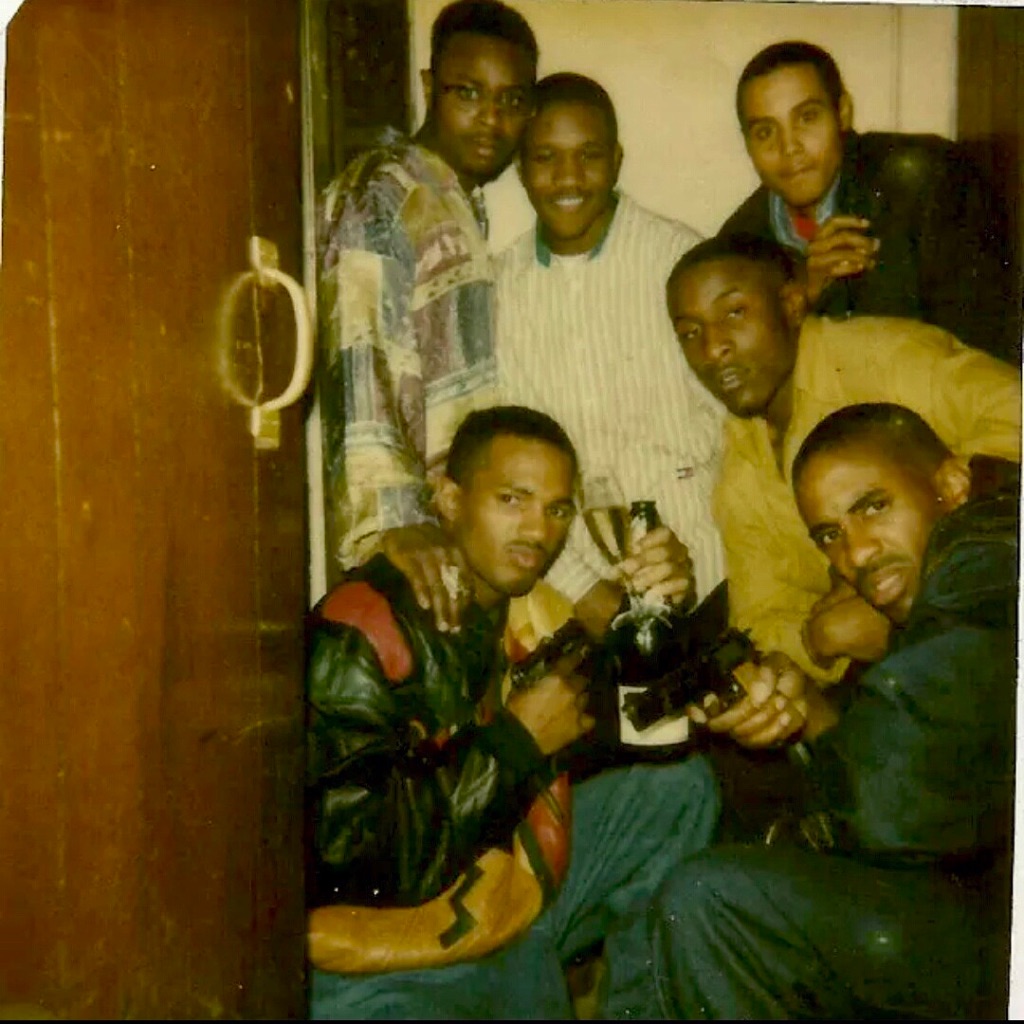
Young Self and his crew in Queens, early 1990s

Queens, early 1990s. The crew that shaped me — before the music, before the industry, before any of it. This is where the story started.

"The streets had a logic. And I was good at operating in it. What I couldn't see was that the whole system was designed to consume you."

— Super Producer Self

What I was developing — without knowing it — was the ability to watch. To observe. To understand what people wanted, what they feared, what they respected, and what moved them. I became a student of human behavior in Shadyville before I ever became a student of music. And years later, when I was in rooms with executives at Universal Records and Def Jam, those exact same skills were what got me through the door and kept me at the table.

The streets taught me things that I have never fully been able to unlearn — and some of those things I haven't wanted to. Loyalty. Presence. The ability to be still in chaos. Reading people without showing your hand. These are not things they teach in music business school. These are things Shadyville put in me.

The Real Lesson

A good upbringing doesn't guarantee a clean path. And a rough path doesn't guarantee a bad ending. What you develop in the hardest environments — if you survive them — is often exactly what you need for the next level. The street IQ I built in Shadyville made me dangerous in boardrooms. I just needed to point it in the right direction.

· · ·
Chapter Three

The Wrong Route — Eight Years

Prison at 16. Eight years. What those walls actually taught me

In 1987, I was nineteen years old. And I went to prison.

Distribution and sale of drugs. That's what I was convicted on. I'll say that much because it's the truth and I'm done hiding from my own truth. Beyond that, I'm not going to go deeper into the details — not because I'm ashamed, but because those details belong to that chapter and that chapter is closed. What matters is what it cost and what came out of it.

What I will tell you is this: I went in as a hoodlum and I tried to keep being a hoodlum inside. That was a near-fatal mistake. I got stabbed in prison. I almost died.

Let that land for a second. I almost died — not on the streets, not in some dramatic movie scene, but on a prison floor, stabbed, because I hadn't yet understood that the code I was living by had a hard ceiling and I had just hit it. There is nothing like almost dying to reorder your priorities. When you're lying there and you don't know if you're going to make it, everything you thought was important becomes very small very fast. And something else — something quieter — starts to come forward.

"I got stabbed in prison. Almost died. That's when something changed in me. Not immediately — but that was the moment the real reckoning started."

— Super Producer Self

I served eight years total — not in one continuous stretch, but in multiple bids. I was released in 1993. Eight years of my life, from nineteen to my mid-twenties, spent inside. The years when most people who would go on to build something were building it. I was inside. And I almost didn't come out at all.

What surviving that stabbing taught me — slowly, not all at once — was that I was not untouchable. None of us are. The toughness I wore like armor was not actually protection. It was a provocation. It was a way of daring the world to test me, and the world accepted that dare, and I almost paid for it with my life. The man who came out of that experience was different from the man who went in. Not fully formed yet — not even close — but cracked open in a way that eventually let something better come through.

What prison teaches you, if you survive it and let it — is patience. Real patience. The ability to be alone with your thoughts and not run from them. The understanding that real power is quiet. The discipline of doing nothing when doing something would make everything worse. And the ability to read who is real and who is performing — which, as it turns out, is one of the most valuable skills you can have in the music industry.

I was released in 1993. I came home to a Queens that had changed and a hip hop world that was exploding. Biggie was about to happen. Nas was in the studio. Jay-Z was not yet Jay-Z but he would be soon. Wu-Tang was assembling. The energy was electric and I was standing on the outside of it — twenty-something years old, a scar I'll carry forever, eight years behind me, and no plan except to not go back.

To Anyone Reading This From Inside

Whatever cell you are in right now — physical or otherwise — use the time. Read everything. Observe everything. Think about what you're actually good at that nobody has paid you for yet. The walls around you are not the walls of your future. They are just the walls of right now. Plan for who you're going to be the day after you get out. That plan is the only thing they cannot take from you.

1967Born August 27 in Jamaica Hospital, Queens, New York
~1979Family moves to Shadyville (Hempstead & Springfield area, Queens)
1987Convicted on multiple drug charges — selling and distribution. Sentenced at age 19.
1993Released after serving time on multiple bids. Returns to Queens. Hip hop is exploding around him.
1994Starts producing hip-hop music. The music career begins.
· · ·
Chapter Four

The Keyboard Nobody Wanted

Salt-N-Pepa, the ASR-10, and the machine that started everything

After I came home from prison in 1993, my friend Gavin Wray was worried about me. He could see the pattern — the way I was still circling back toward everything that had put me inside in the first place. Gavin was a good man. And Gavin had a girlfriend.

Her name was Cheryl James. The world knew her as Salt — as in Salt-N-Pepa. One of the biggest female acts in hip hop history. Multi-platinum. Mainstream. Famous. And Gavin's solution to keeping me out of trouble was to hire me as her personal bodyguard.

I want you to sit with what that setup looks like from the outside: a man just out of prison on drug convictions, no music training, no instruments, no industry connections, no formal skills of any kind — now in the house of a pop star every single day. The opposite of everything I'd been living.

And then I saw the keyboards.

There was a rack of equipment in the corner of her house. Keyboards, samplers, gear — the kind of setup a musician accumulates over a career. Nobody was touching it. It was just sitting there the way things sit in a successful person's house — present but not being used. I started looking at it. Then I started touching it. Not because I had a plan. Not because I saw myself as a producer. Honestly, it was pure curiosity. A man who grew up learning to figure things out was presented with something new to figure out.

"Take it home. See if you can figure it out."

— Cheryl "Salt" James, to Edward Hinson

Salt noticed me messing with the equipment. And she did something I will be grateful for until the day I die — she gave me the Ensoniq ASR-10 sampler. Told me to take it home. See what I could do with it.

The ASR-10. For producers who know, you know. It was the machine. The Ensoniq ASR-10 was used on some of the most important records in hip hop history. It sampled, it sequenced, it processed. In the right hands, it was a complete studio in one unit.

I did not have the right hands. Yet.

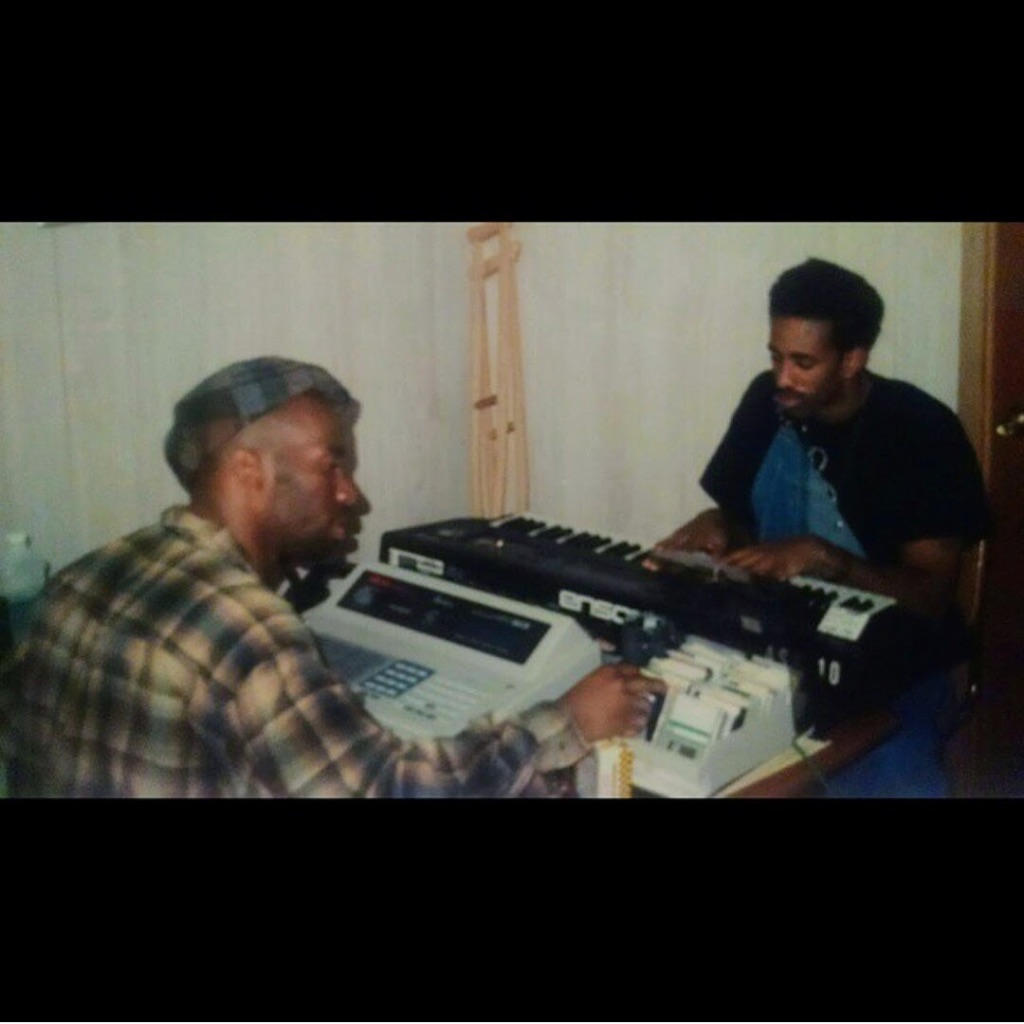
Self and Gavin Wray working on the ASR-10, 1993

In the early days — two men and a machine, figuring it out. The ASR-10 and the floppy disk library that started a platinum career.

I took that machine home and I locked myself in. Days. Weeks. Months. I had no manual. No teacher. No YouTube. No forums. I had cassette tapes — old cassette tapes, the kind you'd find at the bottom of a box — and I had the machine, and I had time. I started sampling from the cassettes. Started building. Started hearing things in my head and figuring out how to pull them through my fingers and into the machine.

I'm going to tell you something about those months: it was the first time in my adult life I was completely absorbed in something that wasn't destructive. All the intensity, all the focus, all the competitive drive that I'd been spending in the streets — I was pouring it into this machine. And it was giving something back. Music. Real music. Coming out of nowhere, made by a man with no training and a borrowed machine and a borrowed basement and cassette tapes.

The Lesson

Your gift will show up in unlikely places. It rarely arrives with a label on it. The ASR-10 was sitting in a corner — ignored, unused, available. Most people walk past their destiny because it doesn't look like what they expected. Pay attention to what you keep being drawn back to, even when you have no reason to be. That pull is not random. It is direction.

By the time I came up from that basement, I had beats. Real beats. And I had built something in those months that no prison sentence and no bad deal would ever be able to take away: I could make music. That knowledge belonged to me now. It was in my hands. And everything that came after came from those hands.

· · ·
Chapter Five

Mind Management & The 24th Floor

Rockaway Blvd, Harlem, and the living room where the real hits were born

After Salt gave me the ASR-10 and I had spent months learning it, I landed a job at a local recording studio on Rockaway Boulevard at 134th Street in Queens. The place was called Mind Management Studios. That was my first real foot inside the professional music world — not as a name, not as an artist signed to anything, just as a young producer with beats who needed to be in the room where things happened.

Mind Management is where the next chapter of my life actually began. Two things came out of that studio that changed everything.

The first was a man named Eat 'Em Up.

Eat 'Em Up was Onyx's road manager. He came through Mind Management and heard my beats. He liked what he heard. And he did what a real connector does — he took my music directly to the group. That introduction, through that studio on Rockaway Boulevard, is the real story of how I got to Onyx. Not a chance encounter. Not a lucky break. A man who heard something real in my work and carried it to the right people. Eat 'Em Up is a name I carry with me because without that moment, the whole story looks different.

The second thing that came out of Mind Management was a man named Diggem.

Diggem and I built a real connection at that studio. And we made a decision together: we were going to leave Queens and make a move to Harlem. We found a spot at 145th Street and Lennox Avenue — Building 6, 24th floor. We moved in together, and in that living room, we built a studio.

"We called it the 24th Floor. That living room in Harlem was where everything happened. That's where the real music got made."

— Super Producer Self

The 24th Floor was not a commercial studio. No acoustic panels. No rate card on the wall. It was a living room in a Harlem high-rise with equipment set up and the door open to whoever needed to be there. And the people who came through were exactly what you'd expect in mid-1990s Harlem — hungry, raw, talented, and street.

Craig Mack came through. Mic Geronimo was a regular. Cam'ron came through, still coming up before the Dipset era took full hold. Upcoming rappers, people from the block, people from the industry — all of it together in one apartment on the 24th floor. It was not a safe, sanitized creative environment. Some people were scared to come there because of the element in the room. I understood that. That element had been part of my life since Shadyville. But that element is also exactly where my sound came from.

The rawness you hear on "Shut 'Em Down." The darkness underneath "What's My Name." That edge didn't come from a professional studio with session musicians and a catered lunch. It came from the 24th Floor — from real people in a real environment giving real reactions to music that was made for them specifically.

Both of those records — "Shut 'Em Down" featuring DMX and "What's My Name" — were created at the 24th Floor Studios. The Onyx "Shut 'Em Down" remix featuring Big Pun was made there too. The living room in Harlem is where those platinum records were born.

Where the Sound Came From

People always ask producers where their sound comes from. Mine came from the 24th Floor — from a Harlem living room full of street energy, hungry artists, and no filter between the music and the people it was made for. Your environment gets into your records whether you plan it or not. Be intentional about what surrounds you when you create.

And then there was Bo.

Bo was someone I'd built a real relationship with over those grinding years. He knew my work. He believed in what I was building. And one day he came to the apartment on the 24th floor and told me he was going to take me to Trackmasters — Poke and Tone, one of the most powerful production teams in hip hop at that moment. Bo walked me through that door. And what came after that introduction is the story of how a producer from Southside Jamaica Queens with a borrowed keyboard and a Harlem living room studio ended up with his name on 25+ platinum records.

Cocoa Brovaz — Tek and Steele — also came into the picture during this era. They heard my beats and brought me in, leading to "Black Trump" featuring Raekwon on their album The Rude Awakening. That record — my first major credit, released under the name Lord Self — put my name inside the Boot Camp Clik and Wu-Tang universe. Five beats, five thousand dollars, and a placement that announced to New York that there was a new producer worth paying attention to.

· · ·
Chapter Six

Onyx, DMX & Irv Gotti

The records born on the 24th Floor that changed everything

Eat 'Em Up took my beats to Onyx. That's the simple version. The real version is that a road manager who came through Mind Management Studios on Rockaway Boulevard heard something in a young producer's work, believed in it enough to carry it to one of the most respected hardcore rap groups in New York, and that single act of belief became the foundation of everything that followed.

Onyx were finishing their last album on Def Jam — the group behind "Slam," one of the most visceral records in early 90s hip hop. Baldheads. Rage. Pure New York energy. They responded to my beats. I went in and did seven records for their third album, Shut 'Em Down. Five made the album. The title track was mine. And both that track and the "What's My Name" record for DMX were made at the 24th Floor — in my living room studio in Harlem. That raw Harlem energy, those street-level sessions with hoodlums and hungry artists coming through — that's what you're hearing in those records.

Here is what I need you to understand about "Shut 'Em Down": that is one of the first records DMX ever appeared on. Dark Man X — the man who would become one of the most powerful, most raw forces in hip hop history — one of his earliest appearances in hip hop happened on a beat I made in a Harlem living room on the 24th floor. I also produced the remix featuring the late, great Big Pun. Two legends on one production. The week the album dropped it peaked at number ten on the Billboard 200. Seven beats. Seven thousand dollars. Position that money cannot buy.

"Shut 'Em Down, What's My Name, the Onyx remix with Big Pun — all of that was made in my living room on the 24th floor in Harlem. That raw sound came from that room. From those people."

— Super Producer Self

"What's My Name" — from DMX's five-times platinum album ...And Then There Was X — also came from the 24th Floor. That spooky piano intro. That haunting darkness underneath his delivery. Complex Magazine called it one of "25 Rap Songs That Make Us Want To Punch Someone In the Face," citing specifically those piano notes. That was mine. Made in a Harlem living room with a heavy street element and zero commercial polish. That's exactly why it hit the way it did.

Then Irv Gotti entered the picture. Working A&R at Def Jam — the man who would go on to found Murder Inc. Records. When he found out I was behind the Onyx beats his words were direct: "Yo man, I didn't know you made beats like that." He introduced me formally to Ja Rule and DMX, and then did something even more valuable — he started teaching me the business. Contracts. Splits. Label politics. Where the money goes before it ever reaches a producer.

I resisted it at first. I had a street mentality that had no patience for industry knowledge — I thought I could operate in this world the same way I operated in every other. That arrogance cost me. Irv was trying to hand me a map of a territory I was already walking through blind. Eventually I listened. And what he taught me about the business is as responsible for my career as any beat I ever made.

Two Things That Built the Career

Eat 'Em Up carried my beats to Onyx. Irv Gotti tried to carry my understanding of the business to a higher level. The music is never enough on its own — you need people who believe in it, and you need to understand the system you're operating in. Honor the people who open doors for you. And walk through them prepared.

That same year — 1998 — I produced "Queensfinest" featuring Nas for DJ Clue's platinum album The Professional. DJ Clue. Nas. Queens through Harlem. The 24th Floor had done its work and was now being heard everywhere.

· · ·
Chapter Seven

Loreal, Chris Lighty & The Placements That Built the Name

The two people — besides Eat 'Em Up — who made me who I am

When Bo took me to Trackmasters, the person he put me in front of was a woman named Loreal Coppedge.

Loreal was an A&R at Trackmasters at the time — and she became my manager. She managed me and some of the top hip hop engineers in New York City. I want to say her name clearly and give her her flowers right here in this book, because Loreal Coppedge is one of the most important people in my entire career. Her and Eat 'Em Up — those two people made me who I am today. They believed in my work at the moment when belief translated directly into opportunity, and they used their positions to open every door they could for me.

Every major placement I got after "Shut 'Em Down" — Loreal's fingerprints are on it. Nas on DJ Clue's "Queensfinest." N.O.R.E. and Styles P on "Come Thru." The placements that built my name into a name that labels and artists took seriously. All of that came through Loreal's tutelage. She taught me the game the way a general teaches a soldier — not just what to do, but why, and what it costs when you do it wrong.

"Loreal Coppedge and Eat 'Em Up — those are the two people who made me who I am. I don't say that lightly. I say it because it's true."

— Super Producer Self

After Loreal and I went our separate ways, my next chapter of management came through one of the most powerful figures in hip hop: Chris Lighty.

Chris Lighty ran Violator Management — one of the most influential management companies the genre has ever seen. His roster at various points included 50 Cent, Busta Rhymes, LL Cool J, Cam'ron, Ja Rule, and more. When you were with Violator, you were connected to the center of gravity of New York hip hop. Chris became a mentor to me. His brothers were also part of my world. Through that relationship I met Nick Cannon. Kay Slay. More names that opened more rooms. That's how this industry works at its best — one real relationship compounds into the next one, and the next, and suddenly you're in a network that most people spend their whole careers trying to reach from the outside.

I carry Chris Lighty's name with the same weight I carry Eat 'Em Up's and Loreal's. These were not transactional relationships. These were people who invested in me as a human being and as an artist. That kind of support is rare. It is not given freely in this industry. When you receive it, you honor it — in how you work, in how you treat people coming up behind you, and in how you tell your story.

On the People Who Made You

Behind every producer with a long career is a short list of people who believed in them before the world did. Eat 'Em Up. Loreal Coppedge. Chris Lighty. Salt. Gavin. Bo. None of them had to do what they did for me. They chose to. Know who those people are in your own story. Name them. Thank them. And when your time comes, be that person for someone else.

The placements kept coming. Ja Rule's Venni Vetti Vecci went platinum — "Daddy's Little Baby" and "Kill 'Em All" featuring Jay-Z, the latter featured in Complex's "Ja Rule Breaks Down His 25 Most Essential Songs." Rule 3:36 went triple-platinum — "6 Feet Underground." LL Cool J's G.O.A.T. — "Farmers." Musiq Soulchild's platinum debut. Cam'ron. Fat Joe. Method Man. Sticky Fingaz. DJ Envy with "H.O.V.A." featuring Jay-Z. And then Juelz Santana — "Dipset" and "Dipset (Santana's Town)" featuring Cam'ron. The record that earned me a Grammy nomination for Best Rap Performance by a Duo or Group at the 46th Grammy Awards.

A Grammy nomination. From a living room on the 24th floor in Harlem. From a machine Salt gave me. From a connection Eat 'Em Up made. From doors Loreal opened and Chris Lighty walked me through. That's the real architecture of a career. Not one man alone. A team of believers.

· · ·
Chapter Eight

Bone Brothers on the Tour Bus

Daddy's House Studios, Wishbone, and an album made at 70mph

The Bone Thugs N' Harmony chapter of my life started not on a bus — it started at Daddy's House Studios.

Daddy's House was Puff Daddy's studio — one of the most legendary recording facilities in New York hip hop history. That's where I first connected with Bone Thugs through Steve Lobel, their manager. Steve was a real figure in the industry — the kind of connector who built genuine relationships across the whole ecosystem. He made the introduction, and from there I got tight with Wishbone. A real friendship. Not an industry relationship — an actual brotherhood that developed over time, on the road, in sessions, in the kind of shared experience that only comes from being in the trenches together.

Bone Thugs N' Harmony — out of Cleveland, Ohio. Eazy-E signed them. One of the most distinctive acts in hip hop history: rapid-fire melodic delivery, harmonizing over dark beats, a sound that was completely untouchable. Grammy Award winners. Multi-platinum. And in 2005, they brought me on tour.

"Me and Wishbone got real tight. Real brotherhood. And they ended up taking me on tour — that's where the Bone Brothers album got made. On the bus, city to city."

— Super Producer Self

I produced the entire Bone Brothers album on the tour bus. Not a figure of speech — every record, made while we were moving between cities and shows. No proper studio. No acoustic treatment. A laptop, my equipment, and the energy of being on the road with people who were serious about their craft. The bus was loud. The schedule was chaos. We made an album.

And I have to tell you about Mustafa.

Mustafa was real. He was very instrumental in the Bone Brothers album — deep in the creative process with us, present in those sessions in a way that mattered. And somewhere on that tour, me, Lazy Bone, and Mustafa did something that sealed the bond permanently: we stopped at a tattoo spot called Tattoo Polo and all three of us got the same tattoo. Two letters — GP. Gangster Party. Same ink, same day, same place. That's what brotherhood looks like. Not a handshake. Not a credit on an album. The same mark on your skin.

Mustafa passed away a few years ago. Rest in peace to my brother. Some losses don't get smaller with time — you just learn to carry them differently. He was there for one of the realest chapters of my life and I carry him with me in everything I do.

On Brotherhood in the Industry

The music industry will give you business relationships by the hundreds. What it rarely gives you is real brotherhood — people who are with you on the road, in the creative chaos, at 3am when the session isn't working and nobody feels like pushing through. When you find those people, hold onto them. The GP tattoo wasn't about the ink. It was about saying: we were here together, and that matters. Rest in peace, Mustafa. That tattoo is permanent for a reason.

Around that same period I produced a record for Mobb Deep — Havoc and Prodigy, two of the most respected names in New York hardcore. For that one record they paid me fifty thousand dollars. One record. Fifty thousand. That's the moment I truly understood what being established meant in dollar terms. Your price is a reflection of your position. And my position had moved a long way from seven thousand dollars for seven Onyx beats.

· · ·
Chapter Nine

The Million Dollar Room

Amazin, Dino Delvaille, a billboard in Queens, and a deal that changed everything

I had an artist named Amazin. He was from Queens — my borough, my people. And I believed in him the way a producer only believes in an artist when they can see something that the rest of the world hasn't seen yet. I built a demo around him. Produced his records. Shaped his sound. Put everything I had into making the case for why this man deserved to be heard at the highest level.

The meeting was with Dino Delvaille at Universal Records. Me and Dino had a great relationship — the kind of real working rapport that makes rooms feel different before anything is even said. I walked in with the demo and with Amazin himself. And Amazin was just amazing. The kind of talent that makes a room stop. The kind of presence you can't manufacture, can't teach, can't produce — it's either there or it isn't. It was there.

We walked out of that meeting with a deal worth over one million dollars.

"Me and Dino had a great relationship. My artist Amazin — he was from Queens, and he was just amazing. We walked out of Universal with over a million dollars."

— Super Producer Self

I need you to understand what that moment represented — not just in money, but in geography. We had a giant billboard at Gertz Mall in Queens. Gertz Mall — a landmark in Jamaica, Queens, where I grew up. Where I ran the streets. Where I went to prison. My artist's face on a billboard at the mall in the neighborhood that made me. That image meant something that no platinum plaque could fully capture. It was proof — visible, public, undeniable proof — that the kid from Southside Jamaica Queens had made it real.

A boy from Southside Jamaica Queens. Drug convictions at nineteen. Eight years across multiple bids. A borrowed keyboard. A living room studio on the 24th floor in Harlem. A road manager named Eat 'Em Up. A manager named Loreal Coppedge. A mentor named Chris Lighty. A friend named Bo. Every single one of those pieces stacked on top of the other until I was standing in Universal Records with a seven-figure deal and a billboard in my hometown.

That's not luck. That's twenty-seven years of not giving up distilled into one room.

And then circumstances I couldn't control took it apart.

I'm not going into detail on what those circumstances were — some things belong to the people involved and not to a page. What I will tell you is that the deal that was supposed to be the next level became the beginning of the fall. The album was ready. The machine was in place. And then it wasn't. And I wasn't equipped — emotionally, mentally, structurally — to absorb that kind of loss without it taking pieces of everything else with it.

By this point in my career the credits were stacking. DMX. Ja Rule. Jay-Z. LL Cool J. Onyx. Cocoa Brovaz. Cam'ron. Musiq Soulchild. More platinum than I had walls for. I had Range Rovers, a Mercedes, a Bentley, Hummers. Jewelry. A house in New Jersey. The full picture of what success was supposed to look like. And then the Amazin situation unraveled, and I started running from the pain of it — the way I'd always run — straight into everything that would eventually take all of it down.

1993Released from prison. Gavin Wray → Salt's keyboard. The ASR-10 changes everything.
1994–96Mind Management Studios, Rockaway Blvd. Meet Eat 'Em Up, Diggem. Move to Harlem — The 24th Floor.
1997–98Cocoa Brovaz "Black Trump" feat. Raekwon. Onyx Shut 'Em Down feat. DMX — #10 Billboard 200. DJ Clue feat. Nas.
1998–99Bo → Loreal Coppedge at Trackmasters. She becomes manager. All major placements flow through her.
1999DMX "What's My Name" (5× platinum). Ja Rule "Kill 'Em All" feat. Jay-Z. Loreal → Chris Lighty → Violator.
2000LL Cool J "Farmers." Cam'ron. Musiq Soulchild. Universal deal — Amazin, $1M+. Gertz Mall billboard.
2003–04Juelz Santana "Dipset (Santana's Town)" — Grammy nomination. Method Man. DJ Envy feat. Jay-Z.
2005Daddy's House Studios → Bone Thugs. Tour bus. Bone Brothers album. GP tattoo with Lazy Bone & Mustafa. Mobb Deep — $50k one record.
· · ·
Chapter Ten

The Fall

Depression, the DWIs, and how I lost everything I built

I want to talk about depression. Not as a clinical term. Not as something I read about in a book. As something I lived inside — something that was happening to me in real time while I was watching my entire life come apart and couldn't figure out how to stop it.

The music business is about sex, money, and drugs. That's not cynicism — that is an accurate description of the operating environment at that level, in that era. I was in it. Fully. I'm not going to stand here and pretend I was above it because I wasn't. And for a while, the lifestyle felt like it was part of the success. It felt like what you were supposed to be doing when you'd made it. Range Rovers. A Mercedes. A Bentley. Hummers. Jewelry. A house in Teaneck, New Jersey — just across the bridge from New York the way you do when you get a little bread and want to level up. I had all of it.

And then the Amazin deal collapsed. The album was mixed. The album was mastered. We had a billboard at Gertz Mall in Jamaica, Queens — my neighborhood, my people, my face on a wall in the place where I grew up. And then circumstances I couldn't control took it all apart. The deal was gone. The momentum was gone. And I didn't know what to do with that.

What hit me was depression. I didn't call it that at the time — I didn't have the language for it and honestly I didn't have the willingness to look at it directly. But that's what it was. A real, heavy, suffocating depression that came from losing something I had worked my entire adult life to build. It wasn't just money. It was identity. It was proof. It was the thing I had been pointing to that said: everything you went through — the prison, the streets, the years — it was worth it because look what you built. And then it was gone.

"I fell into a deep depression. The music business is about sex, money, and drugs — and I was into all of it. When everything fell apart, I didn't know how to handle it. I didn't have those tools."

— Super Producer Self

Here is what depression does when you don't address it and you don't have the tools to address it: it finds an exit. It finds whatever substance, behavior, or distraction will make the feeling stop for a few hours. For me, that exit was drinking. The DWIs started stacking — Driving While Intoxicated, one after another. I wasn't driving drunk because I was reckless. I was driving drunk because I was in pain and I was running from it the only way I knew how. Every charge was another door closing. Every court date was money going out and reputation going with it.

I was watching myself spiral in real time. I want to be specific about that because I think it's important: I was not unaware of what was happening. I could see it. I knew what I was doing. I just couldn't stop. And that's what depression does at its worst — it doesn't make you blind to the destruction. It makes you feel like you deserve it, or like you can't do anything about it, or like stopping would require facing something that feels bigger than what you can face. So you keep going. One more drink. One more night. One more bad decision layered on top of the last one.

The lifestyle accelerated everything. The music business at that level is an environment that has no built-in safety net for the people inside it. Nobody is going to pull you aside and say: you're not okay, get some help. The industry keeps moving. The sessions keep happening. The parties keep going. And if you are not right inside yourself, all of that motion just carries you further away from solid ground.

"I was spiraling and I knew it. But I didn't have the tools to stop it. Nobody in that world was going to stop it for me. I had to hit the floor first."

— Super Producer Self

The cars went. The Bentley. The Range Rovers. The Mercedes. The Hummers. The jewelry. The house in Jersey. The accounts that looked bottomless found their floor. What I didn't lose in the deal falling through I lost in the lifestyle. What I didn't lose in the lifestyle I lost in legal fees and court costs. And what was left after all of that — Rikers Island took.

And through all of it — my kids suffered. That is the part that sits with me the hardest. My children watched their father lose everything. They felt it in ways they shouldn't have had to feel at their age. And out of all the people I had helped over the years — all the artists I had put on, all the people I had looked out for, opened doors for, gone to bat for — not one of them showed up. Not one. When I had nothing, the people I had done the most for were nowhere to be found. No phone call. No floor to sleep on. No hand extended. Nothing. I had poured into people for years and when the moment came that I needed something poured back, I was standing alone. That lesson — about who is really in your corner when the lights go off — is one I have never forgotten and will never stop teaching.

People always ask how someone goes from platinum records to prison. Like there is supposed to be a wall between those two realities that a person can't cross. There isn't. I had changed the output of my life — music instead of the streets — but I had not done the internal work. I had never learned how to sit with grief, with failure, with loss. The streets taught me to push through or push back. Neither of those strategies works when what you're facing is inside you. You cannot outrun depression. You cannot out-hustle it. You cannot produce your way out of it if you haven't first dealt with what's underneath it.

I don't say any of this to make excuses. I say it because there are people reading this right now who are in the exact same spiral — maybe not with platinum records and Bentleys, but with real things they built and real loss they can't process — and they are doing to themselves what I did to myself. And I want them to know: what you're feeling has a name. It's depression. And depression is not weakness. It is not a character flaw. It is not something to be ashamed of. It is something to be addressed, with real help, from real people who are qualified to give it.

The Real Cause of the Fall

The DWIs were not the problem. The spending was not the problem. Those were symptoms. The problem was untreated depression rooted in unprocessed loss — and a lifetime of learning to handle pain by running from it rather than sitting with it. If you are building a career in music and you are not doing the inner work at the same rate as the outer work, you are building on a foundation that cannot hold what you're putting on top of it. Get the help before you need the help. The studio will wait. Your mental health cannot.

The same decisions that had defined my life before music — before the ASR-10, before Mind Management, before the 24th Floor, before Eat 'Em Up and Loreal and Chris Lighty — those patterns were still inside me, waiting. I had changed what I was doing. I had not changed what was driving it. And eventually, what drives you always resurfaces. Mine resurfaced at the worst possible time, in the worst possible way, and it cost me everything I had built.

That is not the end of the story. But it is the truth of that chapter of it. And the truth is the only thing worth telling.

· · ·
Chapter Eleven

Rikers Island

Rock bottom has a name and an address

Rikers Island. If you've been there, you know what it is. If you haven't — it's New York City's main jail complex, situated on a 413-acre island between Queens and the Bronx in the East River. It runs on controlled chaos. The days blur together. The noise is constant. The only privacy you have is inside your own head, which means your thoughts either save you or destroy you in there.

This was 2006. I was 39 years old. I had platinum plaques somewhere in the world with my name on them. Records still getting spun on radio. Credits that would make any producer proud. And I was on Rikers Island.

I was on my face. That's the phrase I use because it's the most accurate: not just broke, not just in trouble — on my face. Meaning your pride is gone, your resources are gone, your options have narrowed to almost nothing, and all you have is whatever is actually at your core. And in those moments — with no distractions, no lifestyle, no studio session to disappear into — you find out exactly what that core is made of.

"My money is gone. But my accolades? You can look them up on Google. The work doesn't disappear. That's the one thing that doesn't go anywhere."

— Super Producer Self

That thought — that the work was still there, documented, permanent — was more important than it might sound. Because in those moments when everything else is stripped, you need something true to hold onto. The platinum was real. The Grammy nomination was real. The sessions with DMX and Jay-Z and LL Cool J and Bone Thugs — all real. Nobody could take that from me. And that meant it was possible to build it again. Because I had already built it once with less than I had now.

I made a decision on Rikers Island. When I got out, I was leaving New York. Not running — leaving deliberately. I needed to put physical distance between myself and every person, place, and pattern that kept pulling me back into the same cycles. I had heard there was something going on in Atlanta. I had a small network down there. A childhood friend named Rat who'd moved south and opened a barbershop. That was enough. It had to be enough.

I was released in 2006. Thirty-nine years old. I packed what I had, which wasn't much, and I went south. I didn't know exactly what I was going to find. I just knew I couldn't stay.

· · ·
Chapter Twelve

Atlanta — The Barbershop Floor

2006. Broke. Alone. Starting over at 39

I want to tell you about a man named Rat.

Rat was a childhood friend from Queens who had made his own moves, relocated to Atlanta, and built something — a barbershop. A place he owned. His own thing. When I came out of Rikers with nowhere to go in New York that wasn't going to pull me back in, Rat was the one who said: come down here. He said it without hesitation. He didn't ask what I had or what I was bringing. He just opened the door.

He fed me. He looked after me. And for a stretch of time when I had nothing else, he gave me a place to sleep. That place was the floor of his barbershop.

I slept on a barbershop floor in Atlanta. Let me be real about what that means, and what it felt like, because this is the part people want to rush past toward the comeback. I'm not rushing past it. I need you to understand what that floor represented.

I was a man who had produced DMX's "What's My Name." Who had a Grammy nomination on Juelz Santana's "Dipset (Santana's Town)." Who had made records for Jay-Z. Who had walked out of Universal Records with a seven-figure deal. Who had drove a Bentley. Who had done all of it. And I was on a floor in a barbershop in Atlanta that belonged to my friend's charity, because that was what I had.

"I didn't want any reminders of my past. I packed everything I had and went south. Starting over — even if that meant starting from the floor. Literally."

— Super Producer Self

The shame of that moment is real. I'm not going to perform some kind of enlightened acceptance of it. It was humiliating. It stripped every story I had told myself about who I was. And in the silence of that, you have two choices: you can try to rebuild the old story, or you can decide to build something completely new.

That's when PR came into my life. PR was from Brooklyn. He was running a studio in Atlanta and he recognized me — "You're Self, right?" — and that recognition, from that specific person in that specific moment, opened a door. He offered me an engineering position. More than that: he helped me get my own apartment. A base. A place to stand on something other than a barbershop floor.

Rat gave me shelter and food when I had nothing. PR gave me infrastructure and a path back into the work. Both men, at different moments, extended a hand when they didn't have to. Neither one of them is a footnote in my story — they are load-bearing pillars in the structure of everything I built after.

Hard Truth

Nobody rebuilds alone. The myth of the self-made person is one of the most dangerous lies in the American success narrative. Every single person who has truly come back from rock bottom can name the people who reached in. Be humble enough to let people help you. Be grateful enough to remember them when you're back on your feet. And become that person for someone else as soon as you're able to. That's the cycle that actually matters.

· · ·
Chapter Thirteen

The Publishing Trap

Universal, a bad deal, Irv Gotti, and 20 years of learning what I should have known on day one

I want to talk about publishing. Not the way they teach it in music business school — the clean, theoretical version with charts and diagrams. I want to talk about what it actually felt like to not understand publishing at the moment it mattered most, and what that ignorance cost me over the next twenty years of my life.

In the year 2000, I signed a publishing deal with Universal Publishing Group. I was at the height of my run. Platinum placements were stacking. My name was on records that were selling millions. I had momentum, credibility, and heat that every producer dreams about. And I signed a publishing deal that I did not fully understand — because nobody in my circle at that time fully explained it to me, and I was too proud and too busy riding the wave to slow down and ask the right questions.

That deal took me twenty years to recoup. Twenty years. Let that settle.

"I signed a publishing deal with Universal Publishing Group in 2000. It took me twenty years to recoup. Twenty years of my earnings going somewhere else before they ever got to me. That is insane. And it happened because I didn't know what I was signing."

— Super Producer Self

Publishing is the most valuable and most misunderstood asset in the music business. When you write or produce a record, two copyrights are created: the master recording and the composition. The composition — the underlying song itself — generates publishing royalties every time that song is performed, broadcast, streamed, synced to a film or TV show, or covered by another artist. Those royalties can generate income for seventy years after your death. They are, in many cases, worth more than the advances and recording fees that get all the attention.

What a bad publishing deal does is transfer your share of those royalties — or a disproportionate piece of them — to a publisher for a term that feels short when you sign it and feels like a life sentence when you are trying to get out from under it. Add in a recoupment clause where you are charged against your own earnings for any advance you received, and you can spend decades watching money flow through your catalog without a meaningful check ever reaching your hands.

That is exactly what happened to me.

What Publishing Actually Means

Your publishing is your ownership stake in the composition — the song itself. A bad publishing deal doesn't just cost you money today. It can cost you royalties for decades on records that are still earning. Before you sign anything with the word "publishing" in it, you need a music attorney — not a general entertainment lawyer, a music publishing specialist — who will explain every clause, every recoupment structure, every reversion right, and every territory included. This is not optional. This is the difference between building generational wealth and working for free for twenty years.

And then there was Irv Gotti.

There are people in this industry who will look at a producer — especially one who is young, hungry, and not fully educated on how the back office works — and see an opportunity. Not to collaborate. Not to build something together. An opportunity to take.

Irv Gotti put his credits on my music. He attached his name to records he did not make and claimed a share of the publishing that belonged to me. This is not a rumor. This is documented. This is known. His name appears on credits for compositions where his contribution was, at best, minimal and, in some cases, nonexistent. And because publishing splits are based on what is registered — not on what actually happened in the studio — those credits translated directly into money leaving my pocket and going into his.

"There are people who put their name on your music without making it. They know how the system works. They're counting on the fact that you don't. That's the game inside the game — and it cost me real money on real records."

— Super Producer Self

I want to be precise about what this kind of theft looks like, because it is more common than people admit and it often happens under a cover of legitimacy. Someone is present at a session. They make a suggestion. They add a line. They sit in the room while you work. And then when the paperwork goes in, they register themselves as a co-writer with a split that has nothing to do with their actual contribution. By the time you find out — if you find out — the record is registered, the royalties are set, and undoing it requires legal action that costs more money than most producers at that stage have access to.

So you eat it. You move on. You add it to the list of things that happened to you that you couldn't fix in the moment. And you carry it.

I carried it for years. The Universal deal. Irv Gotti's credits. A system designed to extract from people who don't know how to protect themselves inside it. I lost real money on real records — records I made, records with my fingerprints all over them, records that are still earning today. And for a long time, the frustration of that sat inside me like something I couldn't put down.

The Credit Theft Playbook — Know It

Credit theft is real, it is documented, and it happens most often to producers who are not yet sophisticated about registration and splits. Here is the protection: register your compositions with your PRO (ASCAP or BMI) immediately — before the record is mixed, before it is delivered, before any money changes hands. Lock in your splits in writing before anyone is in the room. And never, under any circumstances, allow someone else to handle your paperwork for you. The person who controls the registration controls the royalty. That person should always be you.

Here is what those experiences gave me — and I mean this without any irony — they gave me the education I should have had before I ever signed anything. I became a student of the back office. Publishing law. Royalty structures. Sync licensing. Master ownership. PRO registration. Sub-publishing. Co-publishing vs. full publishing deals. Reversion clauses. I learned all of it. Not from a classroom — from the damage. From the contracts I couldn't get out of and the credits I couldn't undo and the twenty years of watching money flow the wrong direction.

And when I finally got to the other side of it — when I understood the system completely, when I had rebuilt and was operating with full knowledge of how every piece of this business worked — I made a decision: I was going to teach it. Not as some abstract music business course, but as real, hard-won, battle-tested knowledge from a man who learned it the most expensive way possible.

That is why I do consulting. That is why the publishing module in my courses is the one I go deepest on. That is why when a young producer sits down with me, the first thing I ask is not about their beats — it's about their publishing. Because I know exactly what it costs to get that part wrong, and I know exactly what it is worth to get it right.

Twenty years is too long to learn a lesson that should take twenty minutes to teach. I am determined that the people who come through my world will not pay what I paid.
· · ·
Chapter Fourteen

The Second Rise — Where I Am Today

From the barbershop floor in Atlanta to building an empire that belongs to me

The studio with PR was the ladder back in. I was engineering — not producing yet, just engineering, because that's what the opportunity was and I was not in a position to turn it down. My ego had cost me everything already. What remained after Rikers and the barbershop floor was a man with enough sense to take what was available and be excellent at it.

Pride is what keeps people on the floor. Humility is what gets them up.

I worked. I rebuilt relationships slowly. I let my craft speak again — the actual work, the ear, the production sensibility that nobody had ever been able to take from me no matter what else they took. Atlanta was a city in the middle of a music explosion. The sound of hip hop was moving south and Atlanta was becoming its center of gravity. And I had the knowledge. I knew how labels thought. I knew how sessions ran. I knew how to build something from nothing because I had already done it once with a borrowed keyboard and cassette tapes on the 24th floor in Harlem.

In 2010, I partnered with Omar "O2" White to start True Sound MediaPlex — a multimedia facility in the Bronx, New York City. VH1's Love & Hip Hop: New York used the facility. BET came through. Major artists on Maybach Music Group were among the clientele. We built something real. A legitimate business, a professional facility, a name in the market. This time I wasn't chasing the lifestyle. I was building infrastructure.

"I really do everything I do for my six kids now. For them. That's not something I say — that's what gets me up every single day."

— Super Producer Self

I earned my music engineering degree from the Institute of Audio Research. I composed the official score to the TV series Empire City. I did voice work in the video game Def Jam Vendetta. I became the Executive Producer of The Wknd Work Show on Shade 45, Sirius XM — one of the most respected platforms in hip hop radio, with a direct line to the artists, producers, and industry professionals who needed to hear what I had to say. The New York City Council gave me the Music Trailblazer Award. The Public Advocate of New York City issued an Official Proclamation in my name. The city that raised me, that I left running from my own failures — came back and acknowledged what I built.

And then came The Service Station TV.

The Service Station TV — at theservicestation.tv — is the 24/7 social media content network I built from the ground up. Music videos, industry knowledge, artist spotlights, and business content streaming around the clock. A platform that combines everything I know about music, production, content strategy, and digital media into something that I own completely. No label. No partner who can pull the plug. No deal that can collapse because of someone else's politics. Mine. Built with my hands, my knowledge, my name, and everything I learned across 30+ years in this industry.

And the full empire lives at superproducerself.com. Let me tell you what's there — because this is where I am today, and I want you to see the full picture of what the second rise actually looks like when you build it right:

🎵Beats & Production — Exclusive and non-exclusive beats available directly from a Grammy-nominated, 25+ platinum producer. No middleman. Direct access.
🎬AI Music Videos — Professional AI-powered music videos starting at $499. 48–72 hour turnaround. The future of visual production, built into the platform.
🎚️Mixing & Mastering — Professional mixing and mastering services. The same ears that worked on platinum records, working on yours.
📚Courses & Education — The Platinum Producer Blueprint. Beat Making Basics. Music Business. AI in Music. Everything I learned the hard way, taught the right way.
📖The Ebook Trilogy — From Prison to Platinum. The Producer's Cheat Code. Hip Hop Business Secrets. Three books. Everything I know. Available now.
📡The Service Station TV — A 24/7 social media content network for independent artists, creators, and entrepreneurs. Watch free at theservicestation.tv
👑Capital Connect Management — Artist management and business infrastructure for independent artists ready to build something real. capitalconnectmanagement.com
📻Shade 45 · Sirius XM — Executive Producer of The Wknd Work Show. A weekly platform reaching artists and industry professionals across the country.
🏆ISRC Registration & Copyright — Protecting independent artists' catalogs. Ownership documentation. Legal infrastructure. The business side done right.

This is not the same man who slept on Rat's barbershop floor in 2006. This is not the same man who lost the Amazin deal and drove himself into a spiral he almost didn't come out of. This is not even the same man who walked into Def Jam's orbit with a cassette tape and a borrowed keyboard in the early 1990s — though I carry all of those men with me everywhere I go.

This is a man who built his own network. His own platform. His own courses, his own ebooks, his own production company, his own management company, his own television channel. An empire that cannot be taken by a label shift or a deal collapse or a lifestyle that outpaces its foundation — because this time, the foundation is the thing I built first.

From Southside Jamaica Queens. From the Shadyville streets. From prison at nineteen on drug convictions. From a stabbing that almost killed me. From a borrowed keyboard in Salt's living room. From the 24th Floor in Harlem. From Eat 'Em Up and Loreal Coppedge and Chris Lighty and Gavin and Rat and PR and Bo and Wishbone and Mustafa — rest in peace — and every single person who believed in me or pushed me or reached in for me at the moment I needed it most.

This is where I am. And I'm still building.

The Second Rise Is Different

When you rebuild after losing everything, you build differently. You don't chase the lifestyle — you build the infrastructure. The second rise isn't about getting back to where you were. It's about building something the first version of you couldn't have imagined. Because you know things now that version didn't know. Every fall was a lesson. Every loss was a curriculum. Use it all.

· · ·
25+Platinum Records
41Production Credits
1Grammy Nom.
27+Years Active
2Comebacks
Complete Production Credits

The Discography

41 verified production credits spanning 1997–2015. From a cassette tape on a Queens street corner to Grammy nominations and seven-figure deals. Every record. Every artist. Every placement that built the name Super Producer Self.

1997 — The Beginning
Credit
"My Time"
X1
First production credit. Released under the name Lord Self.
Credit
"Mad World" (feat. Whosane & X1)
Onyx
1998 — The Breakthrough
Platinum
"Shut 'Em Down" (feat. DMX)
Onyx · Shut 'Em Down
DMX's first ever record. Peaked #10 Billboard 200 in one week.
Platinum
"Face Down"
Onyx · Shut 'Em Down
Platinum
"Veronica" (feat. Sunshine)
Onyx · Shut 'Em Down
Platinum
"Fuck Dat" (feat. All City, Bubba Smith & X1)
Onyx · Shut 'Em Down
Platinum
"Shut 'Em Down (Remix)" (feat. N.O.R.E. & Big Pun)
Onyx · Shut 'Em Down
Featuring the late great Big Pun. One of the hardest remix records of the era.
Platinum
"Black Trump" (feat. Raekwon)
Cocoa Brovaz · The Rude Awakening
The record that started everything. Produced as Lord Self. Raekwon of Wu-Tang Clan.
Credit
"Call Of The Wild"
Heltah Skeltah
Platinum
"Queensfinest" (feat. Nas)
DJ Clue · The Professional
Platinum album. Nas over a Self production. Queens all day.
1999 — Platinum Level
Platinum
"Daddy's Little Baby"
Ja Rule · Venni Vetti Vecci
Ja Rule's platinum debut album.
Platinum
"Kill 'Em All" (feat. Jay-Z)
Ja Rule · Venni Vetti Vecci
Featured in Complex's "Ja Rule Breaks Down His 25 Most Essential Songs." Jay-Z on a Self beat.
5× Platinum
"What's My Name"
DMX · ...And Then There Was X
Five-times platinum album. DMX's biggest single. Complex: "Those spooky piano notes really set the mood." — That's a Self Service production.
2000 — The Peak Years
Platinum
"Soulchild (Intermission)"
Musiq Soulchild · Aijuswanaseing
Platinum debut album. Shows range — R&B/soul pocket alongside hardcore hip hop.
Credit
"Ghetto Girl"
Half-A-Mil
Credit
"Swallowed By The Game"
Big Pokey
Credit
"That's The Way"
Big Pokey
Platinum
"Farmers"
LL Cool J · G.O.A.T.
G.O.A.T. = Greatest Of All Time. Platinum album. LL Cool J — a legend since 1985. Self production.
Platinum
"All the Chicken Heads"
Cam'ron · S.D.E.
Platinum album. The start of a Cam'ron run that included a Grammy nomination.
Credit
"That's Me"
Cam'ron
3× Platinum
"6 Feet Underground"
Ja Rule · Rule 3:36
Triple-platinum album. Ja Rule at the peak of his commercial power.
Credit
"I Cry"
Stone Rivers
2001 — Building Range
Credit
"Rehab"
Outsidaz
Credit
"Live By The Gun"
Tragedy Khadafi · Against All Odds
Credit
"Come Thru" (with Styles P)
N.O.R.E.
Credit
"Cool"
Amazin
Platinum
"Opposites Attract (What They Like)"
Fat Joe · Jealous Ones Still Envy (J.O.S.E.)
Fat Joe. Platinum. Terror Squad era.
Credit
"Come On"
Sticky Fingaz · Blacktrash: The Autobiography of Kirk Jones
Credit
"Not Die'n"
Sticky Fingaz · Blacktrash: The Autobiography of Kirk Jones
Credit
"Oh My God"
Sticky Fingaz · Blacktrash: The Autobiography of Kirk Jones
2002
Credit
"Hood Beef" (feat. X-1)
Onyx · Bacdafucup Part II
Credit
"That's Me"
Cam'ron · ...Harlem's Greatest
Credit
"Money, Money"
Bone Thugs N' Harmony
2003 — Grammy Year
Platinum
"H.O.V.A." (feat. Jay-Z)
DJ Envy
Jay-Z. Again. A Self Service production.
Grammy Nom.
"Dipset"
Juelz Santana · From Me To U
The record that led to the Grammy nomination.
2004
Platinum
"The Show"
Method Man · Tical 0: The Prequel
Method Man. Wu-Tang. A Self Service production.
Platinum
"Shake"
Cam'ron · Purple Haze
Grammy Nom.
"Dipset (Santana's Town)" (feat. Cam'ron)
Juelz Santana · The Sound Of Smoove
Grammy nominated — Best Rap Performance by a Duo or Group, 46th Grammy Awards (2004). The record that put the Grammy on my name.
2005 — The Tour Bus Album
Credit
"Throw Down Your Gun"
Junior M.A.F.I.A. · Riot Musik
Album
Bone Brothers — Full Album
Bone Thugs N' Harmony
Entire album produced by Self Service on the tour bus, city to city, during the Bone Thugs tour. One of the most unique creative achievements of the career.
2015 — The Second Chapter
Credit
"Counter Clockwise"
Ali Caldwell · Heart of Ballads
Proof that the craft never stops. New decade, new artists, same standard.

Institute of Audio Research · Music Engineering Degree · 1997–2000

Voice Acting Credit · Def Jam Vendetta Video Game · 2003

Film Score · Empire City TV Series · 2013

27 Years Distilled

Lessons Learned

What the platinum plaques don't tell you — the truths nobody puts in the interview

Lesson 01
The industry will take everything if you let it
Sex, money, and drugs — that's the operating system of this business at the highest level. I'm not moralizing. I'm warning you. Go in with your eyes open. Know what environment you are entering. Build your personal boundaries before the success arrives, because by the time it arrives it will be too late to build them. The culture of excess is real, it is constant, and it does not care about your future.
Lesson 02
A deal is not a destination — it's a starting line
I got a million-dollar deal at Universal. I got Grammy-nominated records. I had platinum plaques stacking up. And I treated each one as an arrival rather than a beginning. The moment a deal closes, the clock starts on the next thing you need to build. Catalog. Publishing. Multiple income streams. Relationships. The deal is the door — what you build on the other side of it is what determines your longevity.
Lesson 03
Financial education is not optional — it's survival
I earned significant money and lost significant money. Not because I was stupid — because I was financially illiterate. I did not understand publishing. I did not understand what a 360 deal actually costs you. I did not understand how to build wealth versus how to build the appearance of wealth. Learn the difference between those two things before the money arrives. Read your contracts. Understand publishing splits. Know what you own and what you're signing away. Every beat you produce without understanding the business underneath it is a beat that's making someone else rich.
Lesson 04
The people who reach in are everything — treat them like it
Gavin Wray put me in Salt's orbit. Salt gave me the ASR-10. Irv Gotti introduced me to the business. Rat gave me his floor. PR gave me a path back in. Every major turn in my story involved someone who chose to help me. None of them had to. Do not take those people for granted. Do not spend so much time building your career that you forget to honor the people who made it possible. And the moment you have anything to give — give it. Reach back in for someone the way people reached in for you.
Lesson 05
Your craft is the only asset they can never repossess
The money went. The cars went. The house went. The jewelry went. The accounts went. But the ability to sit in front of a board, pull a sample, build a loop, and make something that moves people — that never went anywhere. It was there on Rikers. It was there on the barbershop floor. It was there every single day I was broke and uncertain and starting over. Invest in the craft above everything else. Everything else is temporary. The skill is permanent.
Lesson 06
Mental health is the foundation — not a luxury
The DWIs were not the problem. They were the symptom. The problem was that I had never learned to sit with loss, failure, or disappointment without running from it. I processed grief by creating chaos — which is what I'd been taught to do by every environment I grew up in. If I had the emotional tools at 35 that I'm building now, my story would look different. Do the inner work at the same rate as the outer work. Get a therapist. Build practices that keep you stable when the industry tries to destabilize you. The studio will wait. Your mental health cannot.
Lesson 07
Your past does not disqualify you — it qualifies you
I went to prison at nineteen on drug convictions. I lost everything twice. I slept on a barbershop floor at 39. Every one of those chapters is a credential — not in spite of what happened, but because of what I learned in it and what I built after it. The people who need to hear from me most are not the people at the top. They are the people in the circumstances I've already survived. Your worst chapter is your most powerful story. Use it. Don't hide it. The thing you're most ashamed of is often the thing that makes you most qualified to help someone else.
Lesson 08
Reinvention requires subtraction, not just addition
When people talk about reinvention they talk about what you add — new skills, new city, new connections. Nobody talks about what you have to subtract. I had to subtract the street mentality that told me I could push through everything. I had to subtract the ego that kept me from listening to people like Irv Gotti who were trying to teach me. I had to subtract the identity of the guy who was too real for the industry. You cannot carry the old self into the new chapter and expect different results. Some of what made you strong in one environment will destroy you in the next one if you don't evolve it.
Lesson 09
Relationships outlast every record by twenty years
The records I made with Onyx opened the door to DMX. DMX opened the door to Irv Gotti. Irv Gotti opened the door to Ja Rule, Jay-Z, and the entire Murder Inc. orbit. Every relationship compounded into the next one. The music industry is smaller than it looks from the outside — and the reputation you build travels faster than any single placement. Treat every person in the process — the engineer, the assistant, the intern — with the same respect you give the executive. Because the intern today is the A&R in five years, and they will remember exactly how you treated them.
Lesson 10
The second rise is built differently — and it should be
When I built it the first time, I built the lifestyle. When I built it the second time, I built the infrastructure. Publishing. Business entities. Multiple revenue streams. Teaching. Mentoring. A platform. The second rise isn't about getting back to where you were — it's about building something the first version of you wasn't equipped to build. Because you know things now that version of you didn't know. Every failure is a curriculum if you're willing to be a student of it.
Direct From the Source

Advice to Producers

Not the generic stuff. The real talk — from someone who's been broke and platinum, inside and outside, starting from nothing and arriving in rooms that changed everything.

01
Stop waiting for the perfect setup to start
I made my first beats on a borrowed machine sampling cassette tapes in a basement. No manual. No teacher. No studio. No YouTube. No money. If I had waited for the right conditions, I would still be waiting. The producers who make it are not the ones with the best equipment — they are the ones who start making music with whatever is in front of them right now and don't stop until it's right. Your phone has more computing power than every studio I worked in during my first five years. You have no excuse to not be making music today.
02
Learn the business before the business learns you
Publishing. Mechanical royalties. Performance royalties. Sync licensing. 360 deals. Work-for-hire clauses. What "co-produced" means on a contract versus what it means on a plaque. What you own when you produce a beat on spec. What you're signing away when you take a flat fee. Learn all of it before the money arrives — because by the time the money arrives, the contracts are already in front of you and the other side has lawyers who know exactly what they're doing. You need to know it too. Read every contract. Pay a music attorney to review every deal. That investment will return ten times.
03
Build your catalog like it's your retirement account
Every beat you make is an asset. Every track you produce and own is a revenue stream — now, five years from now, twenty years from now if the catalog is right. I have production credits on records from 1998 that are still being streamed today. The royalties from a great record don't stop when the record stops being on the radio — they compound. Build as large a catalog as you can. Own as much of it as you can. Register every single song with your PRO (ASCAP, BMI, SESAC) the day it's released. Do not leave money on the table because you didn't do the paperwork.
04
Get your music in front of people — by any means necessary
I played a cassette out of a car on a street corner and Tek and Steele walked by and heard it and that became my first major deal. The format changes — cassette to CD to MP3 to streaming to social media — but the principle never changes: your music has to be heard. Post. Share. Send emails. Build a SoundCloud. Build a YouTube channel. Play beats at open mics. Send files to artists. Submit to blogs. Go to sessions. Do not confuse making music with releasing music — they are two completely different actions and you need to do both. Hidden music helps no one.
05
Find your mentor before you need your mentor
Irv Gotti pulled me aside and tried to teach me the game. I resisted it at first because I didn't want to hear from "industry people." That resistance cost me years and money I will never get back. Find someone who is ten steps ahead of where you want to be and do whatever it takes to get in their orbit. Ask questions. Listen more than you talk. Be useful to them before you ask anything of them. A good mentor will save you from mistakes that would cost you years of your career. The best investment I ever made was not equipment — it was paying attention to people who knew more than me.
06
Develop range — genre loyalty is career suicide
I made records for DMX (hardcore rap), Musiq Soulchild (R&B), LL Cool J (legacy hip hop), Bone Thugs N' Harmony (melodic rap), Cam'ron (Dipset era), and Method Man (Wu-Tang). Every one of those pockets is different. Every artist required me to think differently about what the song needed. The producers who last decades are not the ones who perfected one sound — they are the ones who could serve what the music needed regardless of genre. Study everything. Make beats in styles that are outside your comfort zone. The discomfort is where the growth is.
07
Multiple income streams are not optional — they are survival
Beat sales. Licensing. Publishing royalties. Session work. Engineering. Mixing. Mastering. Teaching. Consulting. Sync placements. YouTube AdSense. Merchandise. Live shows. Every single one of these is a real income stream that a producer can build. If you are relying on one source of music income, you are one bad deal or one industry shift away from broke. I learned this the hard way. Build as many legitimate income streams as you can manage, and let them compound together. The producers who stay working for 25 years are not luckier than the ones who don't — they diversified while the others were riding one wave.
08
Your reputation is your most valuable production credit
In this industry, how you work matters as much as what you make. Are you professional? Are you on time? Do you deliver what you promise? Do you credit people properly? Do you honor your agreements? Do you treat the assistant with the same respect as the executive? Every room you walk into, you are making a deposit or a withdrawal from your reputation account. I have seen producers with extraordinary talent fail because they were impossible to work with. And I have seen producers with good-but-not-great talent build long careers because they were reliable, professional, and real. Be both talented and professional. The combination is rare. The combination will keep you working.
09
Study the history of the music you make
Know where hip hop came from. Know the Bronx block parties. Know DJ Kool Herc. Know Afrika Bambaataa. Know how sampling evolved. Know what a break beat is and why it matters. Know the history of the artists you're producing for — what made them who they are, what records shaped them, what sounds they came up listening to. A producer who knows the history of the music is a producer who can make a record that connects to something deeper than the trend of the moment. Trends fade in six months. History lasts forever. Make records that belong to history.
10
Your story is part of your brand — use it
I spent years trying to separate my personal story from my professional identity. I thought the prison, the falls, the failures would disqualify me. What I eventually learned is that they are the most powerful thing I have. Nobody needs another anonymous beat maker. The world has millions of those. What the world needs is a producer who can tell the truth — about where they've been, what it actually cost, what it actually required, and what they actually learned. Your story is your differentiation. Build your brand around the truth of your life, not the image of what you think success should look like.
A Final Word

Your Story Isn't Written Yet

I didn't write this book as a trophy. I wrote it as a hand reaching in.

If you're on the floor right now — financially, creatively, emotionally — I need you to hear this: where you are is not where you stay. I have been on more floors than I can count, in more cities than I planned, with less than I thought I could survive on. And every single time, I got back up.

Not because I'm special. Because I decided to. That's the whole secret. You decide to get up — and then you figure out how. Not the other way around. The decision comes first. The plan comes second. The work comes every day after that.

I went to prison at nineteen on drug convictions. I lost everything twice. I slept on a barbershop floor in Atlanta at 39 years old. And I have 25+ platinum records, a Grammy nomination, a career spanning 27+ years, awards from the City of New York, and a platform I am using to reach back for the next person who is where I was.

You can do this. Whatever this is for you. The version of success that belongs to your life, your gifts, your story. It is available to you. It is not too late. It has not passed you by. The door is still open.

"You can go to prison, you can go to jail, you can mess up — but you can always clean yourself back up again."

— Super Producer Self

— Super Producer Self

Edward Hinson · Queens, New York · 27+ Years in the Game

About the Author

Edward "Self" Hinson

Grammy-nominated producer, engineer, filmmaker, and educator

Edward Hinson — known professionally as Super Producer Self — is a Grammy-nominated, multi-platinum record producer, recording engineer, videographer, filmmaker, and music educator. Born August 27, 1967 in Queens, New York, he has been active in the music industry since 1997.

His production credits span DMX, Jay-Z, LL Cool J, Onyx, Ja Rule, Cam'ron, Juelz Santana, Fat Joe, Method Man, Bone Thugs N' Harmony, Musiq Soulchild, N.O.R.E., Tragedy Khadafi, Heltah Skeltah, Cocoa Brovaz, DJ Clue, DJ Envy, and Sticky Fingaz — accumulating 25+ platinum records and a Grammy nomination for Best Rap Performance by a Duo or Group at the 46th Grammy Awards.

He holds a music engineering degree from the Institute of Audio Research (1997–2000), composed the official score to the 2013 TV series Empire City, and participated in voice acting for the 2003 video game Def Jam Vendetta. He co-founded True Sound MediaPlex in the Bronx in 2010, serving clients including VH1, BET, and Maybach Music Group artists. He is the Executive Producer of The Wknd Work Show on Shade 45, Sirius XM, and currently operates ELPD Productions Inc. and The Service Station TV in Atlanta, Georgia.

He has received the Music Trailblazer Award from the New York City Council and an Official Proclamation from the Public Advocate of New York City.

Grammy Nomination
"Dipset (Santana's Town)"
Best Rap Performance — 46th Grammy Awards
NYC Council Award
Music Trailblazer Award
New York City Council
NYC Proclamation
Official Proclamation
Public Advocate of New York City
Where to Find Me

Stay Connected

The work continues. Come be part of it.

🌐
Main Website
superproducerself.com
📸
Instagram
@superproducerself
🎵
SoundCloud
soundcloud.com/super-self
🎬
IMDb (Film Credits)
Edward Hinson at IMDb
📀
AllMusic
Self Service at AllMusic
✉️
Business Email
ssbookenz@gmail.com
Go Deeper

Ready to Build Something Real?

The story you just read is the foundation. The courses are where it becomes a system — craft, business, production, and AI, from someone who has been in every room this industry has to offer.

Explore the Courses → Get All 3 Ebooks ($27)

Also Available

The Producer's Cheat Code — $5 Hip Hop Business Secrets — $10

© ELPD Productions Inc. · superproducerself.com · All Rights Reserved