How the Money Really Works in the Music Industry — Publishing, Royalties, Deals, Ownership, and How Producers Actually Get Paid
There's a reason they don't teach this in schools. There's a reason the people who profit most from your music want you focused on the creative and uninterested in the business. An artist who understands how publishing works, how royalties flow, how a 360 deal actually affects them, and how to own their masters — that artist is much harder to exploit than one who just wants to make music and trust the process.
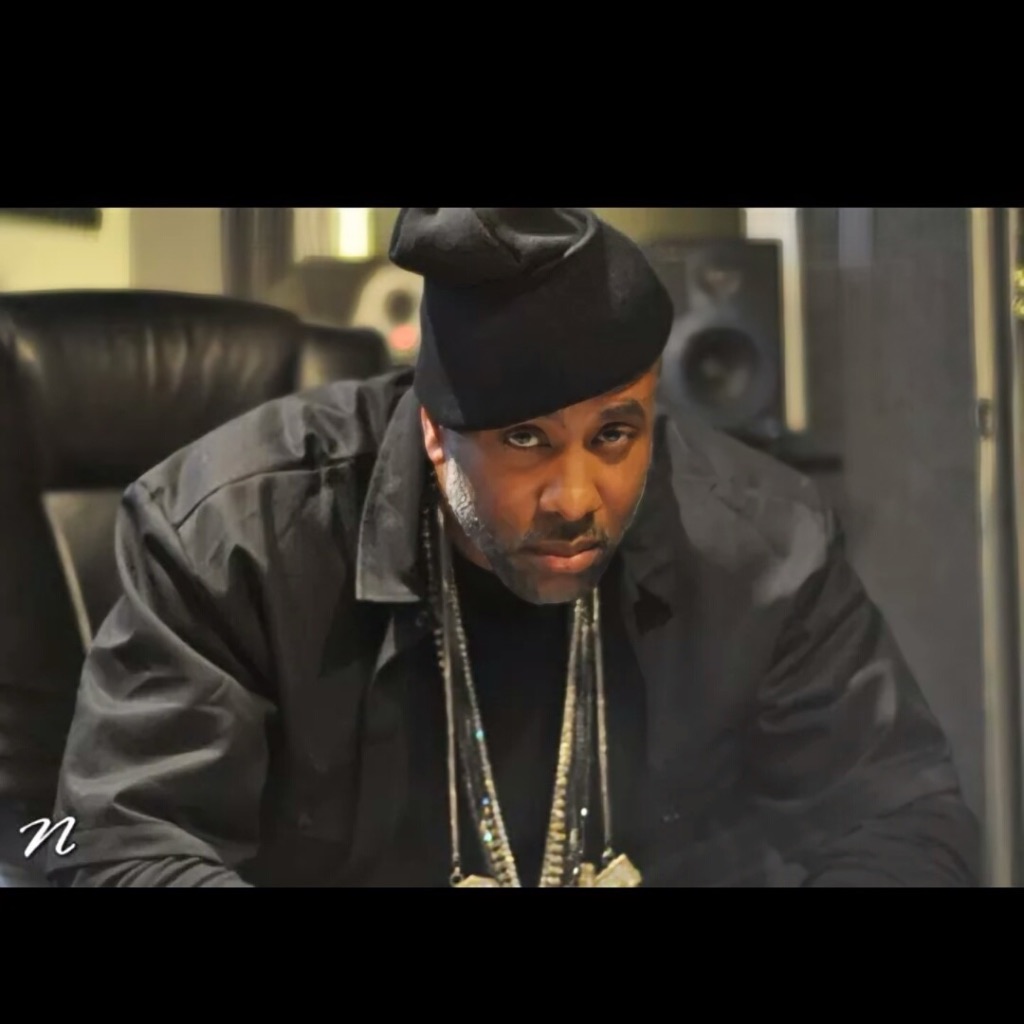
I've been in this industry for 27 years. I've watched artists sign away their publishing for ten years without understanding what publishing is. I've watched producers give away producer points to get in the room. I've watched managers take 25% of everything while delivering almost nothing. I've been on both sides of the table — the room where the deal gets made and the cell where you realize you didn't understand what you signed.
This ebook is the business education the industry hopes you never get. Every secret in here is something the people at the top already know. Now you do too.
— Super Producer Self
The single most misunderstood and most valuable asset in the music business
Publishing is the most important word in the music business that most artists cannot define. Let me fix that right now. Music publishing refers to the ownership and administration of the underlying musical composition — the song itself, as distinct from any particular recording of it. Every time a song is used commercially — played on radio, streamed, licensed in a film, performed live, used in an ad — the publisher and the songwriter get paid. These are publishing royalties. And if you don't own your publishing, someone else is collecting that money for you.
"I signed a publishing deal with Universal Publishing Group in the year 2000 — at the height of my run. I had platinum placements stacking. My name was on records selling millions. And I signed a deal I didn't fully understand. It took me twenty years to recoup. Twenty years. That is not a typo."
— Super Producer Self · Grammy-nominated producer, 25+ platinum recordsThat story is real. And it is not unusual. A bad publishing deal — one signed without full understanding of the recoupment structure, the term length, or the reversion clauses — can keep you collecting nothing on your own music for decades. Every advance you received gets charged back against your royalty earnings before you see a cent. The label or publisher earns from your catalog while you wait to "recoup." On a deal with a large advance and an unfavorable royalty rate, that recoupment can take five, ten, or twenty years — during which your music is generating income that flows everywhere except to you.
Credit theft is a related danger that publishers and labels have exploited for generations. When publishing splits are registered based on paperwork — not on what actually happened in the studio — anyone who controls the filing can manipulate the split. A name added to the credits after the fact, a co-writer listed with a percentage that doesn't reflect their actual contribution, a producer who "sat in the room" suddenly appearing on the registration with a meaningful share. This happens. It is documented. It has happened to producers at every level, including producers with platinum records on the wall. The protection is simple but non-negotiable: register your compositions with ASCAP or BMI before the record is delivered, and lock your splits in a signed split sheet before anyone enters the studio. The person who controls the registration controls the royalty. Make sure that person is always you.
Here's what shocks new artists when they finally understand it: there are two entirely separate copyrights in every piece of commercial music. The master recording copyright — which covers the specific recorded version of the song — and the publishing copyright, which covers the underlying composition. When you stream a song on Spotify, two different sets of rights are being licensed and two different sets of royalties are flowing. Most artists have heard of one. Most don't control both.
Publishing splits in a co-written song work like this: the total publishing — typically 100% — is divided among the writers based on their contribution. If you wrote all the lyrics and your producer wrote the beat, a standard split might be 50/50. But "standard" is a negotiation, not a rule. Major labels and publishers have notoriously pushed lopsided splits on artists who didn't have representation. Always have your splits agreed and documented before the record is released — amending them after the fact is a legal nightmare.
"Publishing is how the music business actually makes money. Not streams. Not shows. Publishing. If you don't own yours, you're working for someone who does."
— Super Producer SelfA publishing deal — where you sign your publishing rights to a publishing company in exchange for an advance and administration services — can seem attractive when you need money and don't have the infrastructure to collect royalties globally yourself. The key term to understand is the reversion clause: when do your rights come back? Many artists sign publishing deals where their songs are controlled by the publisher for 10, 15, or even 35 years. The advance is real. The price is long. Know what you're trading before you trade it.
The most important publishing move for independent artists: register with a Performing Rights Organization (PRO) — ASCAP, BMI, or SESAC in the US — and register every song you write before it's commercially released. These organizations collect performance royalties on your behalf from radio stations, streaming platforms, TV networks, and any other entity that publicly performs your music. If you are not registered, you are not getting paid for that performance. The registrations are free. The royalties can be significant. There is no good reason not to do this.
| Royalty Type | Source | Who Gets Paid | Collected By |
|---|---|---|---|
| Performance Royalty | Radio, streaming, TV, live | Songwriter + Publisher | ASCAP / BMI / SESAC |
| Mechanical Royalty | Physical sales, digital downloads, streams | Songwriter + Publisher | Label pays / MLC collects |
| Sync License Fee | Film, TV, ads, games | Master owner + Publisher | Directly negotiated |
| Print Rights | Sheet music, lyric licensing | Publisher | Publisher |
Publishing is not a bonus — it's the foundation. Register every song. Own your share. Never sign your publishing away without a fixed reversion date and legal counsel.
Most artists know one or two. Here's the full map
The music industry has built an incredibly sophisticated system for generating money from music. The problem is that this system pays you only for the rights you own, the royalties you're registered to collect, and the deals you've structured correctly. Most artists and producers are collecting a fraction of what they're owed simply because they don't know the full map.
There are, depending on how you count them, at least 11 distinct revenue streams that a single piece of music can generate. Not all of them apply to every situation — but every creator should know they exist. Performance royalties from PROs when your song is played publicly. Mechanical royalties from physical and digital sales. Digital performance royalties from services like Pandora and satellite radio. Streaming royalties from on-demand platforms like Spotify and Apple Music. Sync licensing fees from placements in TV, film, ads, and games. Master recording licensing from samples used in other people's music. Print rights from sheet music and lyric licensing. Grand rights from musical theater adaptations. Neighboring rights from certain international markets. YouTube Content ID revenue from music used in videos. And direct live performance income from touring and shows.
"Every time your song is used, money moves. The question is where it goes. Most of the time, it goes to whoever understood the system better than you did."
— Super Producer SelfStreaming royalties deserve a specific breakdown because most artists have wildly inaccurate expectations. Spotify pays between $0.003 and $0.005 per stream. That means one million streams generates approximately $3,000–$5,000 in master recording royalties — split between the label and the artist according to the royalty rate in the contract. An artist on a standard major label deal receiving 16–20% royalties gets roughly $500–$1,000 from one million streams. Before recoupment. Before the label recoups the recording costs, marketing costs, and advance from that royalty. Many artists don't see a check until they've recouped hundreds of thousands of dollars. The million-stream announcement sounds enormous. The reality is much more complicated.
The independent artist, by contrast, who owns their masters and is distributed through a service like DistroKid or TuneCore, keeps 80–100% of those streaming royalties. One million streams could put $3,000–$5,000 directly in their account. Same streams, different deal, completely different financial outcome. This is why "own your masters" is not idealism — it's math.
The royalty system pays everyone who understands it. Register everything, own as much as possible, and never assume one revenue stream is the whole picture.
The four deal types that will shape your entire career — and what each one really means
Every major deal in the music industry falls into one of four basic structures. Understanding what each one actually means — not what it sounds like, not what the A&R tells you it means, but what it legally and financially does to your career — is the difference between building wealth and building someone else's label.
The traditional record deal works like this: the label advances you money to record, market, and release your music. In exchange, they own your master recordings (sometimes permanently), they control your release schedule, and they pay you a royalty rate — typically 12–20% of revenue — after recouping the advance and associated costs. The advance is not a gift. It is a loan, paid back through your royalties before you see a dollar. A $500,000 advance at 15% royalty, with $1M in marketing spend, means the label needs to recoup $1.5M from your royalty share before you get paid. At $0.005 per stream, that requires 300 million streams in your royalty share alone. This is not a rare situation — it is the standard situation.
The 360 deal — increasingly common since the mid-2000s — gives the label a percentage of all revenue streams, not just recordings. Touring, merchandise, endorsements, acting, everything. The label argues this is fair because they're investing in your full career development. The artist should argue it is a significant reduction in lifetime earning potential in exchange for upfront infrastructure. A 20% 360 cut on a $10M touring year is $2M that never reaches the artist. Know what you're signing.
"A deal is a tool. In the right hands, it builds a career. In the wrong contract, it builds a cage with your name on the door."
— Super Producer SelfThe licensing deal is the artist-friendly alternative many independents have moved toward. You own your masters. You license the recording to the label for a defined territory and term — say, the US, for 5 years. The label handles distribution and marketing in exchange for a larger revenue split during the term. When the term ends, your masters return to you. This is the model that has made independent artists like Chance the Rapper, Nipsey Hussle, and others build independently sustainable careers with real ownership.
The distribution deal is the leanest option. You own everything — masters, publishing, control. You pay a distribution partner (DistroKid, TuneCore, EMPIRE, ADA) a flat fee or percentage to get your music on streaming platforms and into retail. You handle all marketing yourself. The revenue share is minimal or zero. The upside is complete ownership. The downside is complete responsibility. This model works best when you have the audience and the infrastructure already — not when you need the label's resources to build them.
| Deal Type | Who Owns Masters | Artist Royalty | Label Take | Best For |
|---|---|---|---|---|
| Traditional | Label (often permanent) | 12–20% | 80–88% | Artists needing full machine |
| 360 Deal | Label | 10–18% + all revenue | 20% of everything | Labels, rarely artists |
| Licensing | Artist ✓ | 50–70% | 30–50% for term | Artists with leverage |
| Distribution | Artist ✓✓ | 80–100% | Fee only | Artists with audience |
Every deal needs a reversion clause (when do rights return?), a creative approval clause (who controls what?), and an accounting provision (how and when are royalties reported?). Without these three things, you have signed a blank check. Get an entertainment attorney before you sign anything with a label — not after.
The best deal is the one that preserves your ownership of what you created. Every dollar you trade in rights is a dollar that pays you for decades. Protect it accordingly.
This is not a creative choice. It's a financial decision with long-term consequences
The label vs. independent debate gets framed as an identity question — are you selling out or staying pure? That framing is a distraction. The real question is financial and strategic: given where you are right now, given your audience, given your resources, given your long-term goals — which path builds the most sustainable business? In some cases, a label deal makes sense. In most cases, the math points somewhere else.
What a major label actually provides: an advance (which you repay through royalties), distribution infrastructure (now matchable by independent aggregators at a fraction of the cost), radio promotion and press (still valuable and hard to replicate independently), and brand validation (still real, still matters in certain markets and demographics). These are real things. The question is what they cost in ownership and control.
What independence provides: ownership of your masters (which appreciate in value as your catalog grows), the ability to change direction without label approval, 100% creative control, higher revenue per unit sold or streamed, and the ability to sell your catalog for significant money later — because you own the asset. Taylor Swift's public dispute over her masters put a number to this reality: master recordings are worth tens of millions of dollars. She didn't own hers. The lesson was expensive and public.
"The label gives you money today. Independence gives you money forever. Which one you choose depends on what you can build right now — and what you believe you'll build tomorrow."
— Super Producer SelfThe hybrid model — independent with distributed label support — has become the standard for savvy artists. Sign to a label for distribution, radio promotion, and market-specific support. Keep your publishing. Keep your masters or license them for a fixed term. Take the infrastructure without surrendering the asset. This requires leverage — usually an existing audience, a proven sales record, or very good legal representation — but it is the deal worth fighting for.
For producers, the calculus is different but parallel. The producer who works for hire gets paid once and surrenders all ownership. The producer who builds their own catalog, registers their publishing, and negotiates backend points on their placements gets paid for decades. The day that record gets sampled, licensed for TV, used in a commercial, or hits a cultural moment — the producer who owns their share eats. The one who signed it away watches.
The label machine is powerful and expensive. Use it when you need it, on terms that preserve what you own. Never sign away your publishing or masters permanently to get a deal you could get independently in three years.
TV, film, ads, games — how your music gets placed, what it pays, and how to get in
Sync licensing is the placement of your music in visual media — television shows, films, video games, advertisements, trailers, YouTube content, and streaming originals. It pays two ways: an upfront sync fee (a negotiated payment for the right to use your music in the specific project) and backend performance royalties (ongoing payments every time the content airs or streams, collected through your PRO). A single sync placement in a well-placed Netflix show or national commercial can generate $20,000–$200,000+ in total revenue. More important than the single check: it exposes your music to millions of new listeners who weren't looking for you.
The sync market is actively and aggressively looking for music. Every streaming platform producing original content needs music. Every commercial brand needs music. Every trailer company needs music. The demand is consistent, the market is professional, and — unlike radio or playlist placements — getting a sync deal does not require you to be famous. It requires you to have the right music, properly cleared, professionally delivered, with both sides of the rights (master and publishing) controlled and available for licensing.
"One TV sync can do more for your career than six months of grinding on social media. It reaches millions of people who weren't looking for you — while you were sleeping."
— Super Producer SelfHow sync placements actually happen: music supervisors — the people hired by productions to find and clear music — either reach out to publishers, use sync licensing platforms, or are pitched directly. The most accessible route for independent artists is through sync licensing libraries (Musicbed, Artlist, Epidemic Sound for subscription-based; Songtradr, Musicbed PRO, Synchtank for direct licensing) and through sync agents who pitch your music on your behalf in exchange for a commission. Getting your music into these systems is the floor. Actively building relationships with music supervisors — attending industry conferences, networking through PROs, building a reputation for reliable licensing and quick turnaround — is the ceiling.
The most important thing for sync: your music must be what the industry calls "sync-ready." Both the master and the publishing must be controlled, cleared, and available for licensing by you alone. If you have uncleared samples, co-writers who haven't agreed to licensing terms, or any cloud over the ownership of your music — you cannot license it, and a supervisor who discovers this mid-process will drop you immediately and tell every other supervisor they know. Clean catalog is the prerequisite for sync income.
Sync money doesn't require fame — it requires clean ownership, professional music, and systematic submission. One placement can fund a year of creative independence.
The full breakdown — beat fees, producer royalties, points, and publishing splits
Being a producer in the commercial music industry involves multiple potential payment streams that most producers either don't know about, don't ask for, or don't know how to negotiate. Here is the complete picture of how a producer should be getting paid — and what most producers are leaving on the table.
The beat fee or production fee is the most obvious: money paid upfront for producing the track. For an independent artist buying a beat online, this ranges from $50 to several thousand dollars depending on the producer's market position. For a major label project, producer fees typically start at $10,000–$25,000 per track for established producers, and can run significantly higher. This is the payment most producers focus on. It is the least important of the three.
Producer points — also called royalty points or back-end points — are a percentage of the master recording royalties. A standard producer deal includes 2–5 royalty points on the album. On a major label project selling 500,000 units, 3 points at a standard royalty base could generate $60,000–$150,000 over time. On a streaming-era hit with 100M+ streams, the math changes but the principle holds. Always ask for points. Always get them in writing. Many producers — especially early in their career — get talked out of asking and settle for a flat fee. This is how you build a career where you work constantly and never build wealth.
"The beat fee is the bill. The producer points are the investment. The publishing is the retirement plan. Most producers only get the bill."
— Super Producer SelfProducer publishing is the game-changer. When you produce a track, you typically contribute to the composition — the melody, the arrangement, sometimes the chord progressions. That contribution is a publishable copyright. Producers who understand this negotiate a percentage of the song's publishing — typically 25–50% depending on contribution. This publishing share is registered with a PRO and generates performance royalties every single time the song is played. Over the lifetime of a hit record, producer publishing can dwarf the original beat fee by a factor of 10 or 100. I know producers who made $15,000 on the beat fee for a hit record and have collected over $500,000 in publishing royalties from the same song over 20 years. The fee is what you make today. The publishing is what you make for the rest of your life.
The producer agreement — the formal contract between the producer and the label or artist — should always address all three: the production fee, the royalty points, and the publishing split. Any deal that only covers the fee and leaves out royalties and publishing is a work-for-hire deal in disguise. Know what you're signing. Get it reviewed by an attorney before you deliver the final files.
| Payment Type | When Paid | Range | Negotiated? |
|---|---|---|---|
| Beat/Production Fee | Upfront | $500 – $50,000+ | Always |
| Royalty Points | After recoupment | 2–5 points | Always — ask first |
| Publishing Split | Ongoing forever | 25–50% of pub share | Most important |
| Mixing Fee (if applicable) | Upfront | $500 – $5,000 | Separately billed |
Three payments: fee, points, publishing. Get all three in writing on every commercial placement. The producers who built generational wealth negotiated the third one hardest.
The mindset and the moves that get you better deals every time
Every negotiation in the music business is a conversation about leverage. Who needs what more? Who has alternatives? Who can walk away? The industry is built by people who understand leverage — and it is primarily funded by artists and producers who don't have any and don't know how to build it. Leverage is not about ego. It's about position. And position is built deliberately.
The most powerful form of leverage in music is an existing audience. An artist with 100,000 engaged followers and proven streaming numbers walks into a label meeting with proof of concept. The label is no longer gambling — they're investing in something that already has momentum. This is the leverage of the modern independent: build the audience yourself, prove the market exists, then negotiate with the label from a position of demonstrated value rather than hope and promise.
The second most powerful form of leverage is alternatives. If you are negotiating with only one label, one publisher, or one buyer for your beat, you have no leverage. You are one rejection away from accepting whatever terms they offer. If you have three labels interested, two publishers competing, and a distribution deal as your fallback, you have negotiating power. Build alternatives before you need them. Have conversations with multiple parties simultaneously. Never let any single deal become your only option.
"The person who can walk away from the table wins the negotiation. The person who needs the deal signs whatever they're given. Know which one you are — and if you don't have leverage yet, build it before you sit down."
— Super Producer SelfTiming is leverage most people don't use. Labels sign artists when they're trending, not when they're static. If you have a viral moment, an appearance, a placement, a credible feature — that is the time to have label conversations, not after the moment has passed. I've watched artists negotiate million-dollar deals on the strength of a single viral record and sign for $50K on the back of the same catalog six months later when the moment had cooled. Move when the leverage is hot.
For producers, leverage is built through a combination of credits, relationships, and catalog quality. One significant placement with a major artist creates leverage for the next negotiation. A strong publishing deal creates financial stability that removes the desperation from the conversation. A producer who has three concurrent album projects and a waitlist is negotiating from a completely different position than one who needs the deal. Build your workload and your profile simultaneously — they reinforce each other.
Leverage is built before you need it. Build your audience, your alternatives, and your timing. The deals you get are a direct reflection of the position you've put yourself in before you walked in the room.
The asset that generates income for decades — and why the industry doesn't want you to have it
Your master recordings are the most valuable thing you will ever create. The master is the original, fixed recording of your song — the specific files that are distributed when people stream, download, or buy your music. Whoever owns the master controls how it's used, when it's licensed, who samples it, and — most importantly — who collects the income from it. This is not a philosophical debate about artistic control. This is a financial reality with multi-million dollar consequences.
The traditional label model required you to give up your masters in exchange for the label funding your recording, distribution, and marketing. In the early days of the industry, there was no alternative — you needed the label's infrastructure to get your music to the public. That infrastructure is no longer exclusively available through labels. Anyone with a laptop and a DistroKid account can put music on every streaming platform globally. The original rationale for surrendering masters has eroded. The practice has not.
What you give up when you sign your masters to a label permanently: every time that music is streamed, downloaded, licensed, sampled, or sold in any format — forever — the label takes their cut first. Your royalty rate is typically 12–20% of what they collect. The label keeps 80–88%. For the rest of your career. For the rest of your life. After you die, for 70 years plus the life of copyright. That is what you are giving away when you sign your masters.
"Taylor Swift bought her way back into her own catalog for hundreds of millions of dollars — and she's one of the most powerful artists in history. Imagine what she would have done if she'd owned them from the start."
— Super Producer SelfThe practical path to master ownership for independent artists in 2024 and beyond: fund your own recordings (or get creative in how you finance them — crowdfunding, grants, licensing advances that don't include masters), distribute through an aggregator that does not take ownership of your masters (DistroKid, TuneCore, EMPIRE), and if you work with a label, fight for a licensing deal with a defined reversion period rather than a permanent transfer.
For producers: every track you create that is not placed under a work-for-hire agreement is a master recording that you own. That catalog has value — present and future. As your career grows and your name becomes more recognizable, early recordings can be licensed, sampled, reissued, and monetized in ways that are impossible to predict today. The producer who owns their catalog is building an asset. The producer who works for hire is building someone else's.
Your masters are your retirement fund, your legacy, and your leverage. Protect them like the asset they are. Every deal that includes permanent master transfer is a deal where someone else profits from your work for the rest of time.
The next step is building the system around it. The Producer's Blueprint course goes deep on how to structure your career, your contracts, your income streams, and your long-term strategy — everything in this book, in motion.
Producer's Blueprint · Beat Making Basics · Mix & Master · AI in Music
Get the Full Blueprint →Also Available
The Producer's Cheat Code — $5 · The Trilogy Bundle (all 3 ebooks) — $27
superproducerself.com →