10
Super Producer Self Presents
The Producer's Cheat Code
10 Things Every Producer Needs to Know Before They Figure Them Out the Hard Way
10 Things Every Producer Needs to Know Before They Figure Them Out the Hard Way
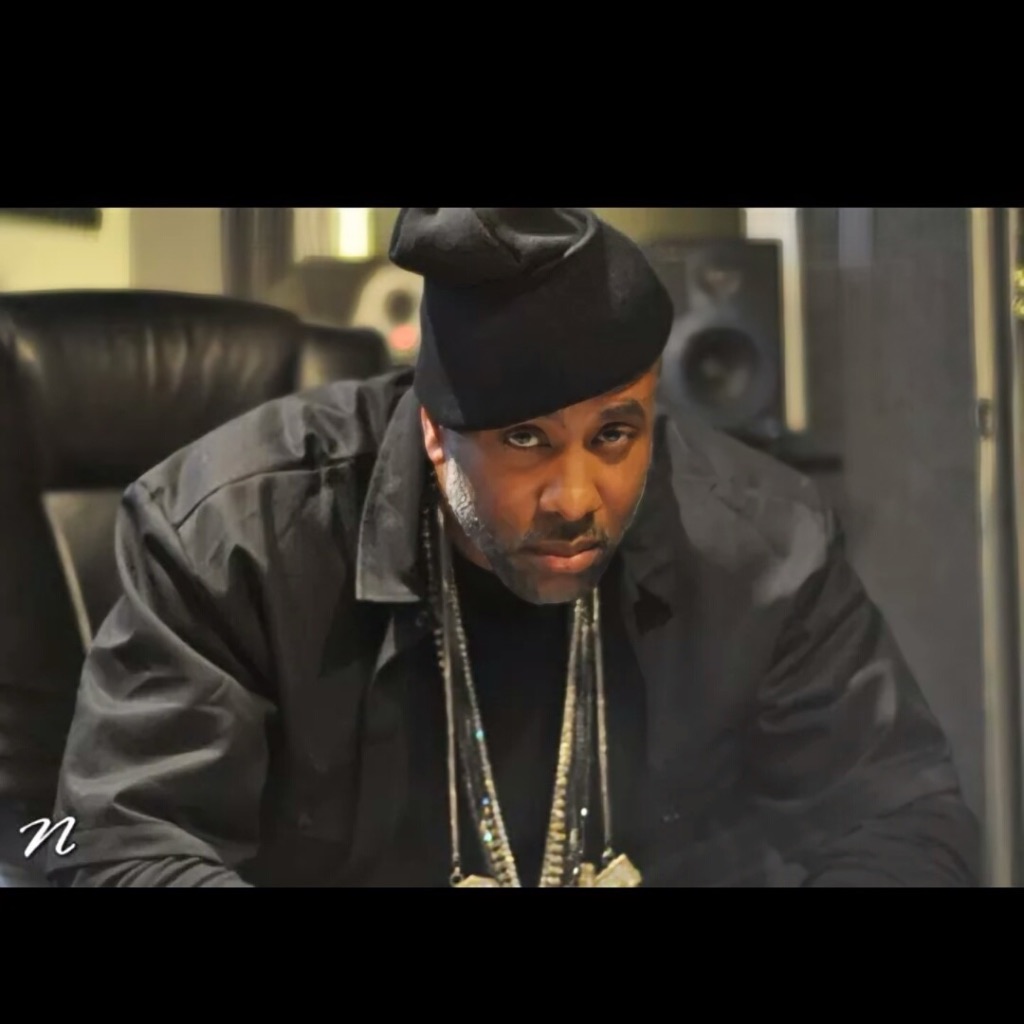
I've been making beats professionally for over 27 years. I've worked with DMX, Jay-Z, LL Cool J. I've watched artists go platinum and then go broke. I've done both myself. And in 27 years, I've identified the 10 things that separate producers who build lasting careers from producers who disappear after their first hot year.
None of this requires special talent. None of it requires connections you don't have yet. All of it requires the knowledge that most people take 10 years to collect — and even then, they only get it after a mistake they couldn't afford to make.
I'm putting it here in one document. These are the cheat codes. Use them.
— Super Producer Self
Before sonic identity, before mixing, before placements — get this right
Every producer I've ever watched fail had the same problem: they couldn't build a beat that held up. Sonically interesting, yes. Technically impressive, sometimes. But structurally weak — no dynamics, no journey, no reason for the listener to stay until the end. A beat with no structure is a beat that gets skipped.
Structure in a beat is not complicated but it has to be intentional. The intro establishes the world. The verse is the foundation — the engine running underneath the artist. The pre-hook is the tension. The hook is the release. The bridge is the surprise. The outro is the exhale. Every section has a job. If you don't know what job each section of your beat is doing, you haven't finished the beat.
Here's what the great producers understand that most beginners don't: subtraction is production. The beat that hits hardest is almost never the most crowded one. Space — actual silence and near-silence — is what makes the elements that are there feel loud, feel heavy, feel real. Beginners fill every bar. Pros build tension by leaving room.
"The best beats I ever made, I knew exactly what was going to happen before the artist even touched the mic. Structure is not a cage — it's the architecture that holds everything up."
— Super Producer SelfThe four-bar loop is the enemy of greatness. When your beat is literally the same four bars on repeat for three minutes, you've made a sample, not a song. Even if you're only going to loop it eventually, build variations. Build a stripped-down 8. Build a full 8. Give the artist something that responds to what they're doing.
The difference between a bedroom beat and a professional one lives in the mix
You can have the best melody on earth and if your mix sounds amateur, no one is taking you seriously. This is a hard truth I'm giving you for free: a mediocre idea with a clean mix will get further than a brilliant idea that sounds like it was recorded through a phone in a closet. The mix is the first impression. And in this industry, first impressions determine whether you get a second listen.
You don't need to be a mixing engineer. But you do need to understand what mixing does. At its core, mixing is about two things: frequency and space. Frequency — making sure every element lives in its own range and doesn't fight with something else. Space — using panning, reverb, and delay to create depth so your mix doesn't sound flat and one-dimensional.
The three most important things in any hip hop mix: kick, snare, and the low end. If your 808 or bassline is fighting with your kick for the same frequency space, your mix will be muddy no matter how good everything else is. Learn to sidechain. Learn basic EQ. Learn to cut before you boost. This is not advanced engineering — this is the floor that every professional track is built on.
"Producers think mixing is the engineer's job. The great ones know it starts with them — before the engineer ever hears it."
— Super Producer SelfReference tracks are your best tool and most producers are not using them. Pick three tracks in your genre that sound exactly how you want your music to sound. Load them up next to your mix. A/B them constantly. Not to copy — to calibrate. Your ears lie to you, especially in your own room. A reference track tells you the truth.
What you don't know about samples will cost you — legally and financially
Let me be direct with you about samples because no one else will be: if you release music commercially with an uncleared sample and it blows up, you will lose everything you made and possibly more. The music industry has seen careers end, albums shelved, and six-figure settlements paid over samples that producers thought were "too small to matter" or "chopped enough to be unrecognizable."
Here's what you need to understand about sample clearance. There are two separate clearances you need for any sampled record. The master recording clearance — permission from whoever owns the original recording, usually a label — and the publishing clearance, which covers the underlying composition. You need both. One without the other is not cleared. Both have separate fees. Both require negotiation. And both can say no.
The cost of clearing a sample ranges from nothing (some independent artists are thrilled) to hundreds of thousands of dollars for a well-known classic. Some samples — particularly James Brown and Beatles-adjacent material — are essentially unclearable at an independent artist budget. Know that before you fall in love with the chop.
"I've seen producers lose everything over a two-bar loop they thought nobody would notice. The label always notices. Their lawyers really notice."
— Super Producer SelfThe shortcut that professionals use: replay it. If you love the groove of a sample, recreate the elements live or with session musicians. A replayed interpolation gives you the feel of the original without the legal exposure — and you own 100% of what you made. Learn to replay. Your bank account will thank you.
The producers who consistently land placements built a process — they didn't wait for one
Placements look like luck from the outside. Inside, they're a supply chain. You need: the right music for the right artist at the right moment with the right relationship to get it in front of someone who can say yes. When you break it down like that, you can start to see the levers you can actually control.
The relationship is the most important lever. I got my first major placement through Gavin Ray, who got me into Salt's orbit, which put me near the right people at the right time. The beat was good — but the beat alone would never have gotten me in that room. Access comes through relationships. Every major producer I know has a story that starts with "I knew somebody who knew somebody." Start building your somebody network now, before you need it.
Your music needs to be placement-ready, which means: professionally mixed, properly tagged (BPM, key, genre, your contact info embedded in the file metadata), and delivered in the format the industry expects (WAV, tagged, with track-out stems available). A&Rs and artist teams receive thousands of beat submissions. If your submission is harder to use than someone else's, it gets passed over. Make it easy to say yes.
"A placement is not a lucky break. A placement is what happens when the right beat finds the right relationship at the right moment. Build all three."
— Super Producer SelfSync licensing is the underrated placement market that most hip hop producers ignore. TV shows, films, commercials, video games — these pay licensing fees up front plus backend royalties, and they're actively looking for music in every genre. A placement in a streaming show can outperform a record deal in total revenue. Register with a sync licensing agency and start submitting your catalog there.
The pricing mistake that keeps talented producers broke
Most producers underprice. Not slightly — dramatically. I've seen producers with catalog that competes with major-label work selling beats for $30 because they're afraid of the "no." Here's the truth about that: the no is not about price. If an artist says your beat is too expensive, they're either not the right buyer for your level yet, or your marketing hasn't justified the value. Either way, the answer is not to lower your price. It's to level up your positioning.
How to set your price: think in tiers, not single prices. Lease — non-exclusive, multiple artists can use it — is your low-ticket entry point. Exclusive — one buyer, all rights transferred — is your high ticket. Premium exclusive includes stems, mixing files, and the producer's full involvement. License tiers typically run: Basic Lease ($20–$50), Premium Lease ($75–$150), Exclusive ($250–$2,000+) depending on your market position and track record.
Where most producers kill themselves: they give away their best beats to artists who "can't afford to pay now but will credit me when they blow up." Let me save you years: they won't. The credit rarely comes. The career rarely blows up. And even if it does, an informal handshake deal is worth nothing in a courtroom. If you give a beat away, get a written agreement. If you want to be paid, be paid. Your work has value now — not conditionally.
"You cannot build a business on 'I'll pay you when I make it.' You build a business on what people pay you today, with a contract that protects both of you."
— Super Producer SelfYour price is also a marketing signal. A producer who sells beats for $15 tells the market they make $15 beats. A producer who sells beats for $500 tells the market something completely different — before the buyer even hears the music. Price communicates value before the product does.
Most producers use social media wrong — and it costs them real opportunities
The mistake I see every single week: a talented producer with a chaotic social media presence that looks like a personal diary instead of a professional portfolio. Random reposts. Opinions about rap beef. Thirst traps. Drake vs. Kendrick commentary. And buried somewhere in all of it — some of the best beats you've ever heard that nobody's looking for because the page gave them no reason to stay.
Your social media has one job: make people who haven't heard your music want to hear it, and make people who've heard it come back and bring someone else. Everything on your page should either be music, music-making process, proof of credibility, or personality that makes people want to know you. Everything else is noise in your portfolio.
Content that actually converts for producers: beat-making process videos (especially sped-up "how I made this" clips), before/after of a mix, reaction shots of artists vibing to your music, client testimonials, and placements when you can share them. You are not selling a personality — you are selling a sound. Make your page sound like something people want to buy.
"Social media is your audition tape that plays 24 hours a day to people who haven't hired you yet. What is it auditioning you for?"
— Super Producer SelfConsistency beats frequency. Three quality posts a week, every week, for 12 months, will build more than 20 posts in January followed by silence until April. The algorithm rewards consistency. So do potential clients who scroll your page and see someone who shows up — reliably, professionally, at a high standard. That's who they want to work with.
Building a body of work that keeps paying you for decades
The single hardest concept to get a new producer to care about is catalog — because catalog pays you in the future, and most producers are focused entirely on right now. But let me show you what catalog means in real numbers: a producer with 200 quality beats properly registered with a PRO (Performing Rights Organization) is generating passive income every single time any of those beats gets streamed, played on radio, or used in any licensed context. That income doesn't require you to be in a room. It doesn't require you to be awake. It requires you to have built it.
The catalog mindset means you are always making music even when there's no immediate opportunity. Every beat you make — whether you sell it or not — is an asset. If it's not placed yet, it might be placed in two years. If it's not relevant now, it might be relevant in five. Catalog compounds. The more you have, the more surface area you have for something to find its moment.
Register everything. Every beat you intend to ever use commercially needs to be registered with ASCAP, BMI, or SESAC. This is how you collect your performance royalties. This is non-negotiable. An unregistered beat is money you're leaving permanently on the table.
"The plaques are proof of the moment. The catalog is proof of the career. Build both — but build the catalog first, because it's the foundation everything else sits on."
— Super Producer SelfThe producers I know who retired financially comfortable did it through catalog. Not one massive deal. Not one enormous placement. Hundreds of beats, consistently placed, consistently registered, consistently generating small and medium royalty payments over 20 years that added up to a life. Build your catalog today. Future you is counting on it.
The difference between collecting contacts and building relationships that actually open doors
Most producers network wrong. They show up to industry events, hand out cards, add people on Instagram, and then wonder why nothing is coming from it. Real networking in this industry is not transactional and it's not fast. It is relationship-building over time with people whose work you genuinely respect and who respect yours. That's it. Everything else is just collecting phone numbers you'll never use.
The most powerful thing you can do for your network is be useful before you need something. Promote someone's project. Connect two people who should know each other. Give a real listen to someone's work and give them honest, substantive feedback. Show up for people when there's nothing in it for you. Do this consistently and your reputation will precede you everywhere you go.
The single most underrated networking move: get in the room. Not to pitch yourself — to be present. Studio sessions, showcases, industry panels, open mics, masterclasses. When you are physically in spaces where the right people are, conversations happen naturally. The organic "so what are you working on?" at the end of someone's panel is worth more than a hundred cold email pitches.
"Irv Gotti schooled me on the game. I almost didn't listen. Don't make that mistake. The people in the room who know more than you are the curriculum. Pay attention."
— Super Producer SelfMentorship is the highest-value form of networking and it's the most underused. Find someone who is 10 years ahead of where you want to be and study them — not just their music, their career decisions. What they said yes to. What they said no to. How they built. The shortcut to the top of your field is learning from someone who's already been there. I had mentors. Every producer who built something real had mentors.
A handshake deal is a setup. Learn this before it costs you a placement
I'm going to say something that will save you money, time, and emotional damage: get everything in writing. Every single time. It doesn't matter if it's your best friend. It doesn't matter if you've worked together for years. It doesn't matter if the deal is small. Get it in writing.
The basic contracts every producer needs to understand: the Beat License Agreement (what rights the buyer is getting, for what use, in what territory, for how long), the Producer Agreement (when you're collaborating on a full project — who owns what, how credits are split, what happens if the project is shelved), and the Co-Production Agreement (when two producers work on the same record). None of these need to be written by a lawyer to start — there are templates available. But they need to exist as a document that both parties sign.
Producer credit is not negotiable. If you made the beat, your producer tag goes on the record, your name goes in the credits, and your publishing is registered. I've watched producers get talked out of their own credits by smooth-talking A&Rs and budget-conscious labels. Your credit is your resume. Your publishing is your income. Neither one is up for discussion.
"The industry is full of people who will take what you don't protect. A contract is not distrust — it's professionalism. It protects both of you."
— Super Producer SelfOn work-for-hire deals: know what you're signing. A work-for-hire agreement means you are giving up all rights to what you create — you are being paid a flat fee and the buyer owns the work permanently. Sometimes this is fine and financially smart. But if you sign work-for-hire on a beat that goes platinum, you will get zero backend, zero royalties, and zero credit unless the contract specifically provides for it. Read before you sign.
Going from producer to music business — and why the best do it
You can only make one beat at a time. That's the ceiling of a producer who has not scaled. And there is a ceiling — I promise you, there is a ceiling on how much you can make when your income is entirely tied to your own hours. The producers who became truly wealthy, truly generational in their impact, found a way to multiply their effort. That's what scaling means.
The most common ways producers scale: teaching (courses, workshops, mentorship programs), licensing (sync, catalog, brand deals), building a label or production company, and building a team that produces while they direct. Every one of these multiplies your output without multiplying your hours. And every one of them is built on the foundation of a strong craft and a strong reputation — which means you have to build the craft first. You can't teach what you don't know. You can't license a weak catalog. Scale comes after foundation, not before.
The teaching income that most producers ignore: there are hundreds of thousands of aspiring producers right now who would pay to learn what you know. If you have real industry experience, real credits, and real insight — that knowledge is a product. It doesn't compete with your production work. It supplements it, builds your brand, and creates income that doesn't require you to be in a session every day.
"I spent 20 years trying to make it as a producer. It took me another 7 to realize that everything I'd learned was worth more than any single beat I could make. Teach what you know."
— Super Producer SelfMultiple income streams is not a luxury goal — it's a survival strategy. A producer who earns from beats, from teaching, from sync licensing, and from consulting is nearly unbreakable. One revenue stream dries up and three others keep you moving. That's the business of music built right. It took me losing everything once to understand this. It doesn't have to take that for you.
The full game — the business, the career strategy, the systems behind 25+ platinum records — that lives in the courses. From beat making to the full producer blueprint, it's all there.
Producer's Blueprint · Beat Making Basics · Mix & Master · AI in Music
See All Courses →© Super Producer Self · superproducerself.com